
Learning to Pivot: January’s Wilderness School Trip to Mount Washington
Our January trip to Mount Washington with the Wilderness School was a powerful reminder that the wilderness is both our classroom and our co‑teacher, and that adaptability is one of the most important skills we practice out there. This year’s trip looked a little different than originally planned. An unseasonably warm winter meant we had to pivot, making decisions in real time based on weather, safety, and the well‑being of the group. That flexibility isn’t a detour from our programming, but instead, is at the very heart of it.
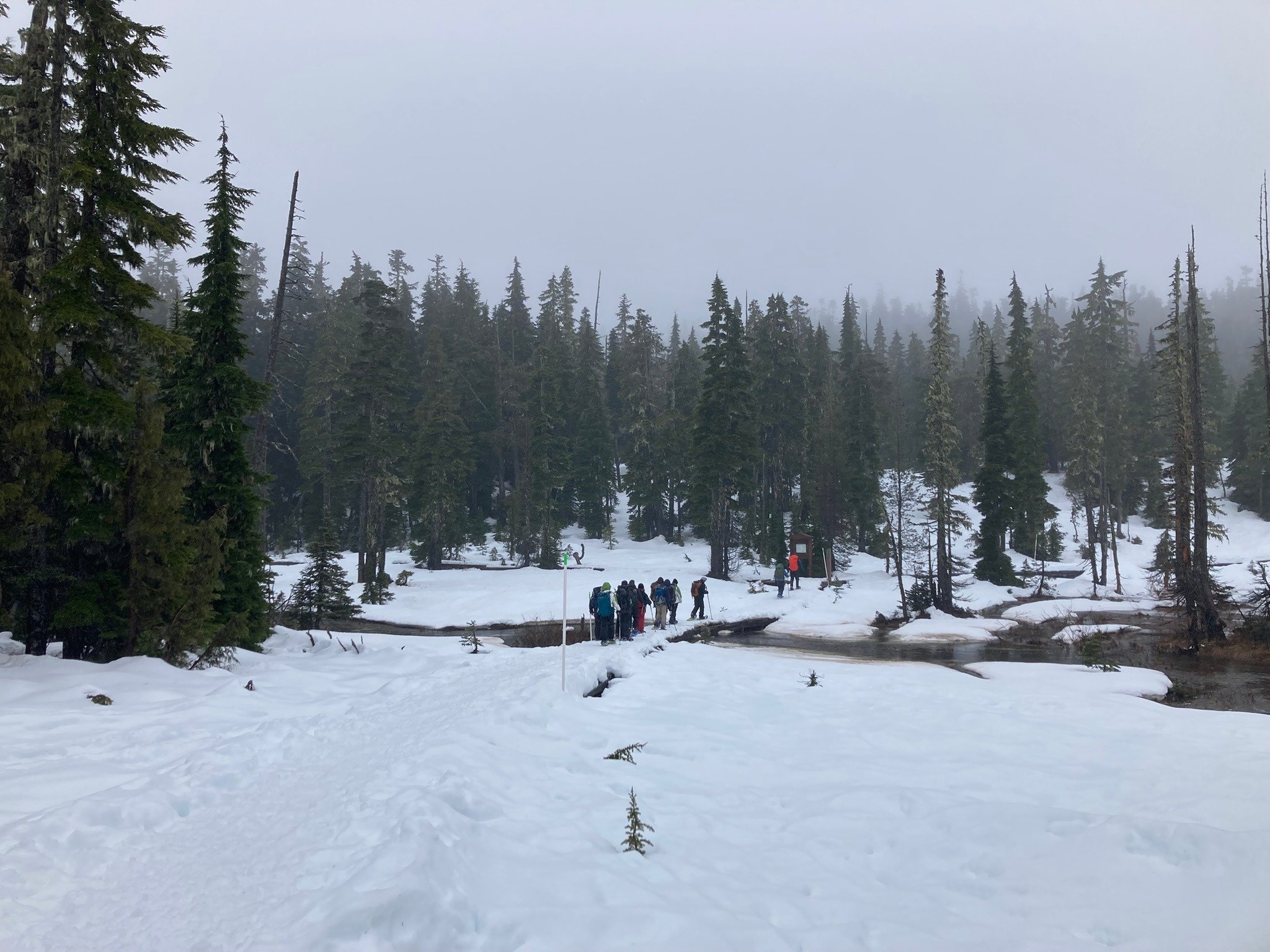
Typically, our second year Wilderness School youth spend Saturday night camping out in the snow at locations like Lake Helen Mackenzie or Battleship Lake. This year, however, the combination of warm temperatures and rain created unsafe conditions. Wet snow, exposed water, and temperatures hovering around freezing increased risk factors, especially with an overnight expedition like this one.
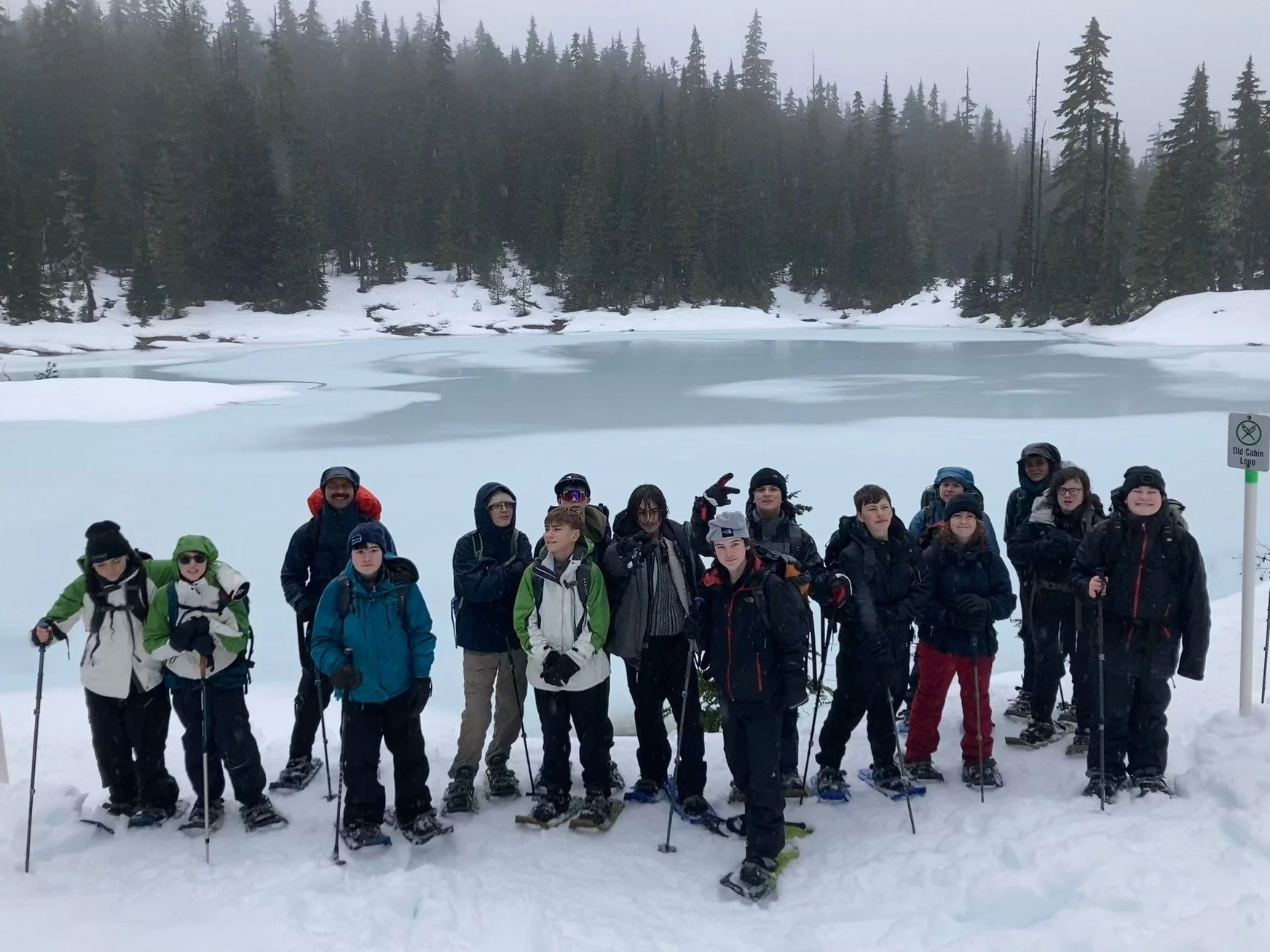
So, instead of splitting the cohorts, we made the call to merge our first year and second year groups and adjust the plan. And while the trip wasn’t quite what we thought it would be, some beautiful opportunities and community building were able to happen because of this change.
From Friday to Sunday, we stayed at Camp Gilwell, a Scouts Canada camp just outside of Courtenay, about a 25‑minute drive from the Mount Washington snowshoe trails. We slept in simple cabins that offered a nice balance between comfort and extreme camping. For our first year participants, this was an ideal introduction to winter camping: learning how to stay warm and dry in cold, wet conditions, while still having access to shelter when needed. There were 13 participants on this trip and for many, especially those who were on their first off‑site overnight trip, this was a significant step.
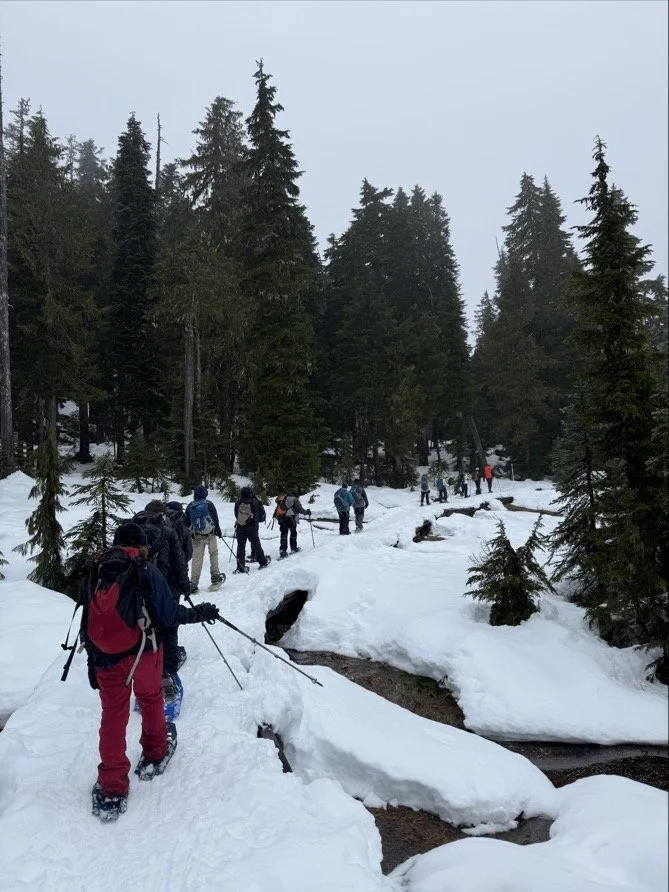
We spent much of Saturday snowshoeing on the trails around Raven Lodge and the Paradise Meadows area. While there was still enough snow to travel, it was quite rainy and wet. Areas that are usually frozen solid this time of year showed open water. Snow was patchy, with lots of exposed ground. These moments became lessons in themselves. Climate change was no longer something we just talked about, we were experiencing its impact. Throughout the weekend, we talked a fair bit about environmental changes, and how Vancouver Island is being affected. Emma Street, a member of the Power To Be team who is currently completing a PhD with research focused around permafrost, offered a powerful lesson on what we were seeing and why it matters. The youth were deeply engaged, asking thoughtful questions, making connections between their experiences and the bigger picture, and learning how we can make a difference.
After a rainy day on the mountain, we headed into Courtenay to warm up and spend some time at the Courtenay Museum of Natural History. Courtenay is a hotspot for paleontological activity, and the museum offered a fascinating look at fossils and the rich history of the region. The warmth, the freedom to wander, and the shift in pace helped reset the group before heading back to camp. On the drive back, we saw an elk along the highway. It was a special moment for the group, and will likely be remembered for years to come.
One of the most powerful aspects of this trip was watching the growth of our second year participants over the past 14–15 months. Last year, they were learning to manage their own self‑care and decision‑making, whereas this year, they naturally stepped into mentorship roles. Without being asked, they modeled good choices, paced themselves, and supported the first years when things felt hard. They weren’t only able to take care of themselves, they were able to take care of each other. Witnessing that shift from self‑focus to community care and seeing it emerge so organically was incredibly meaningful, as this is a cornerstone of the Wilderness School program.
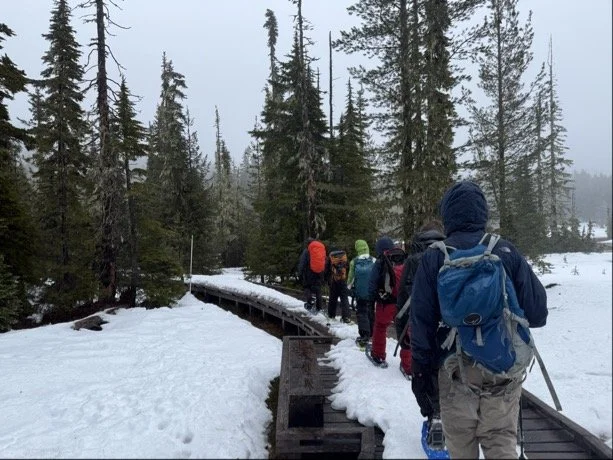
As expected, there were challenging moments. Participants were exposed to the kinds of stressors that show up in everyday life, like discomfort, fatigue, unfamiliar environments, and emotional complexity. With support, the group learned how to navigate those moments with increasing grace, and that cooperation is a skill built through practice. By the end of the weekend, there was a sense of pride in the group. They had worked together to accomplish something great. They had made it. No injuries, no broken gear (a notable improvement from last year’s broken trekking poles!). Just tired bodies, muddy boots, and a growing sense of confidence.
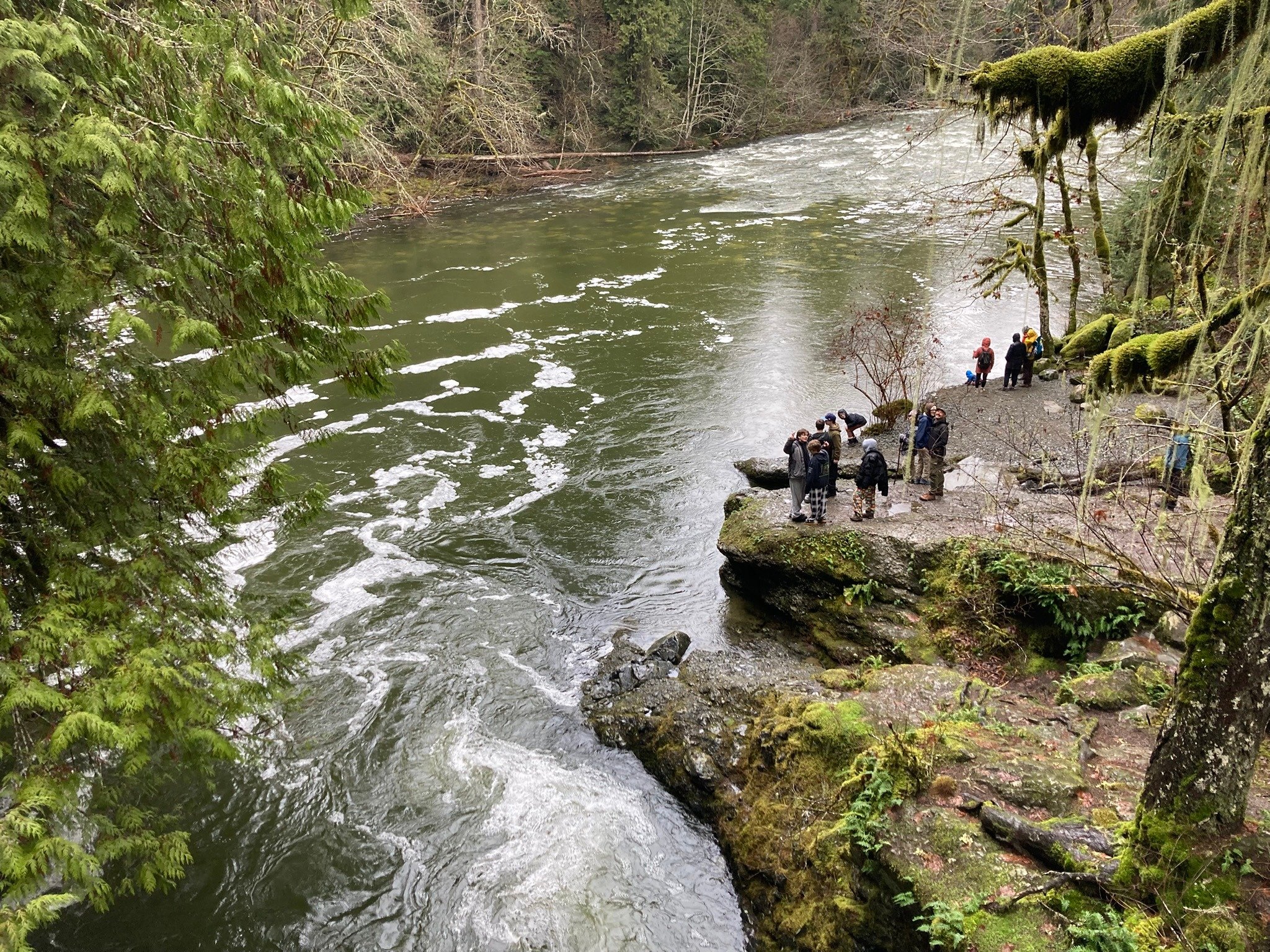
On Sunday, we took our time heading home, stopping for a hike at Englishman River Falls. The slower pace gave us some space for reflection and appreciation of the journey. Back at Prospect Lake, we had enough time to unpack our gear and clean up together, which was important as it allowed the participants to take responsibility for the full lifecycle of a trip, from planning to cleanup.
This trip was about more than snowshoeing or camping. It was about adaptability, caring for our environment, mentorship, and resilience. As the world continues to change, our programs evolve alongside it. Neither the wilderness nor life are always predictable, and learning to pivot, make thoughtful decisions, and care for ourselves and our community are skills that extend far beyond the trail. Once again, the mountain offered us some beautiful lessons - just not in the way we expected!
This Wilderness School expedition was funded by the City of Victoria's Spark Program for Enhanced Youth Safety and Wellbeing.
