
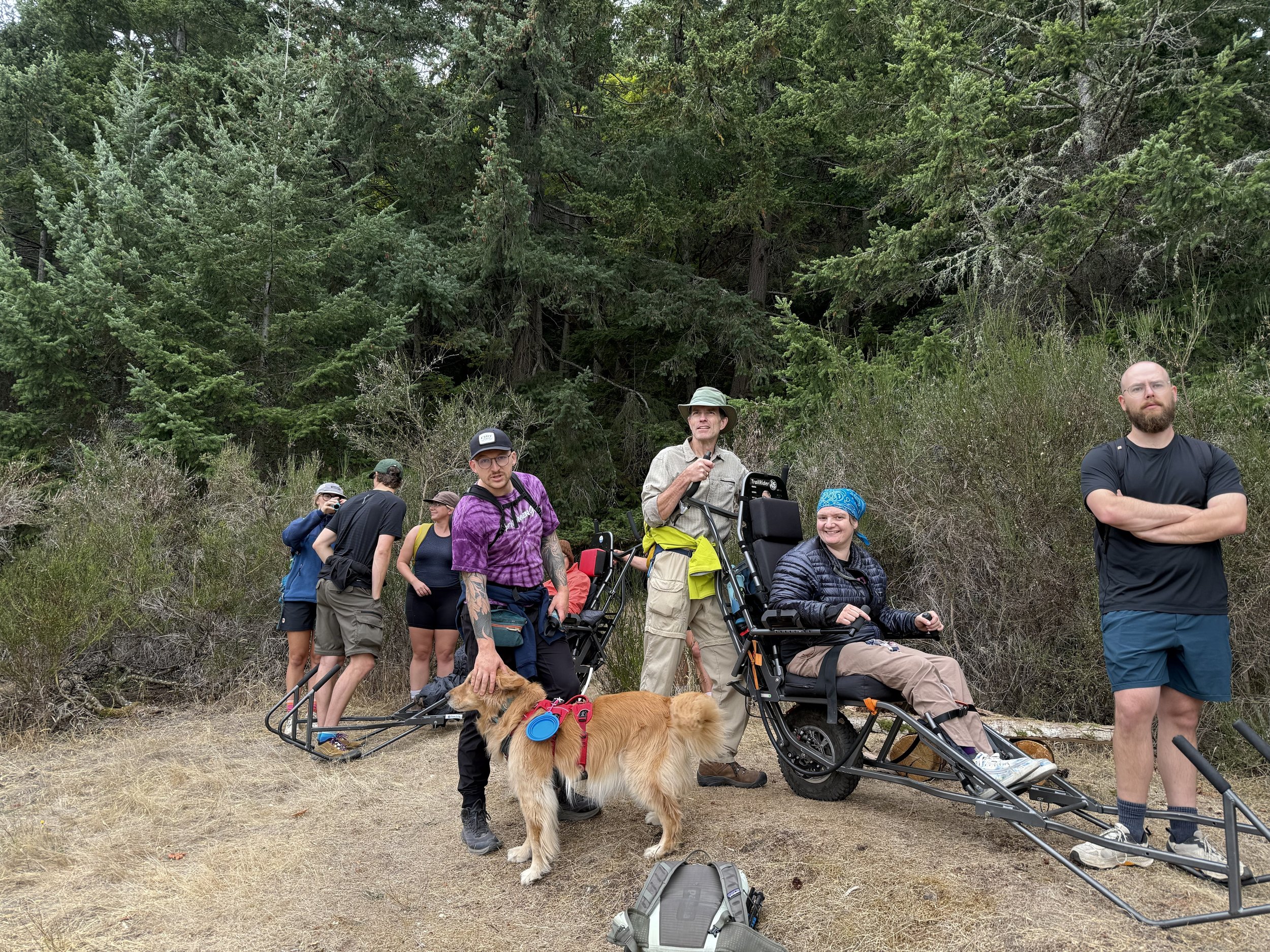
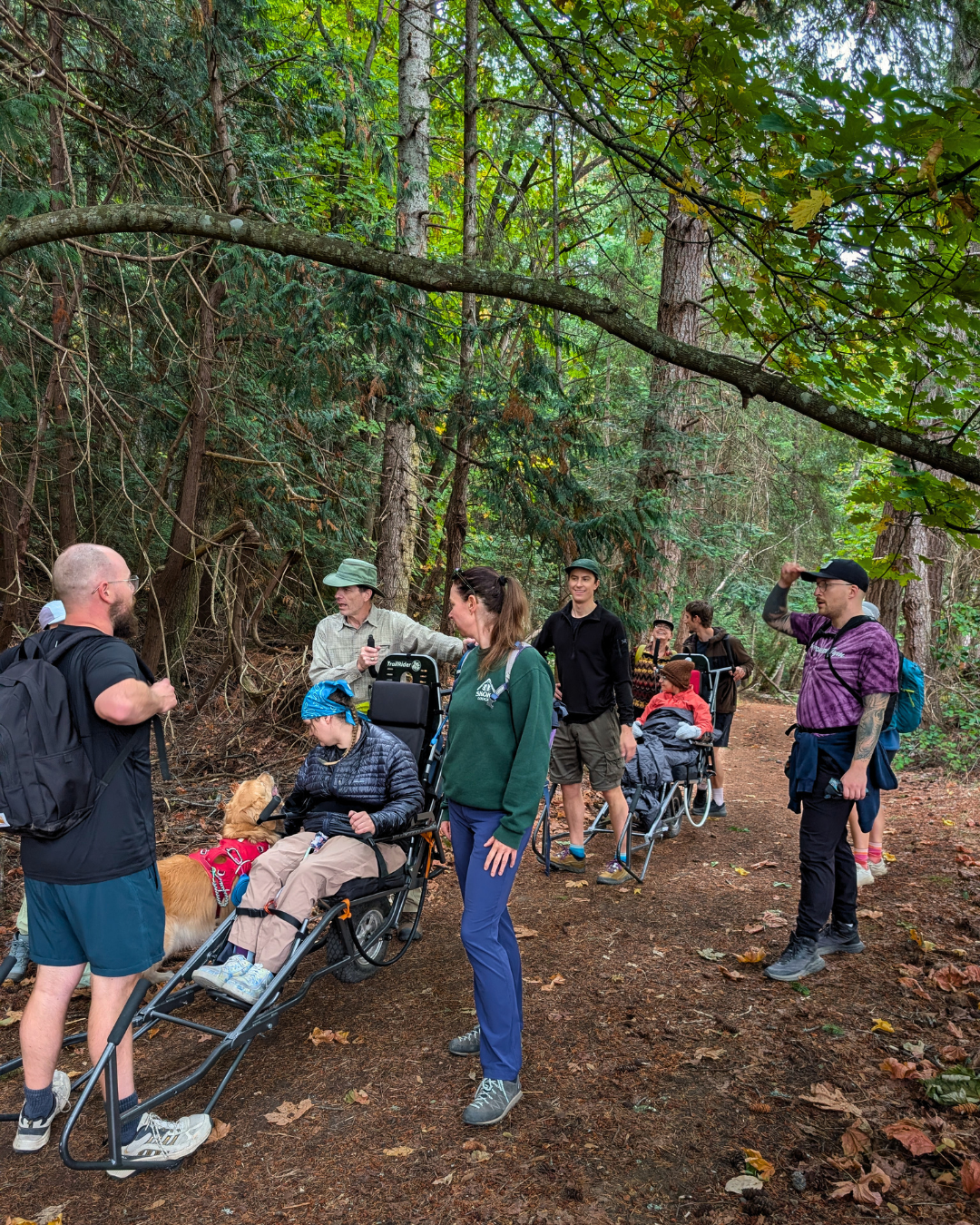
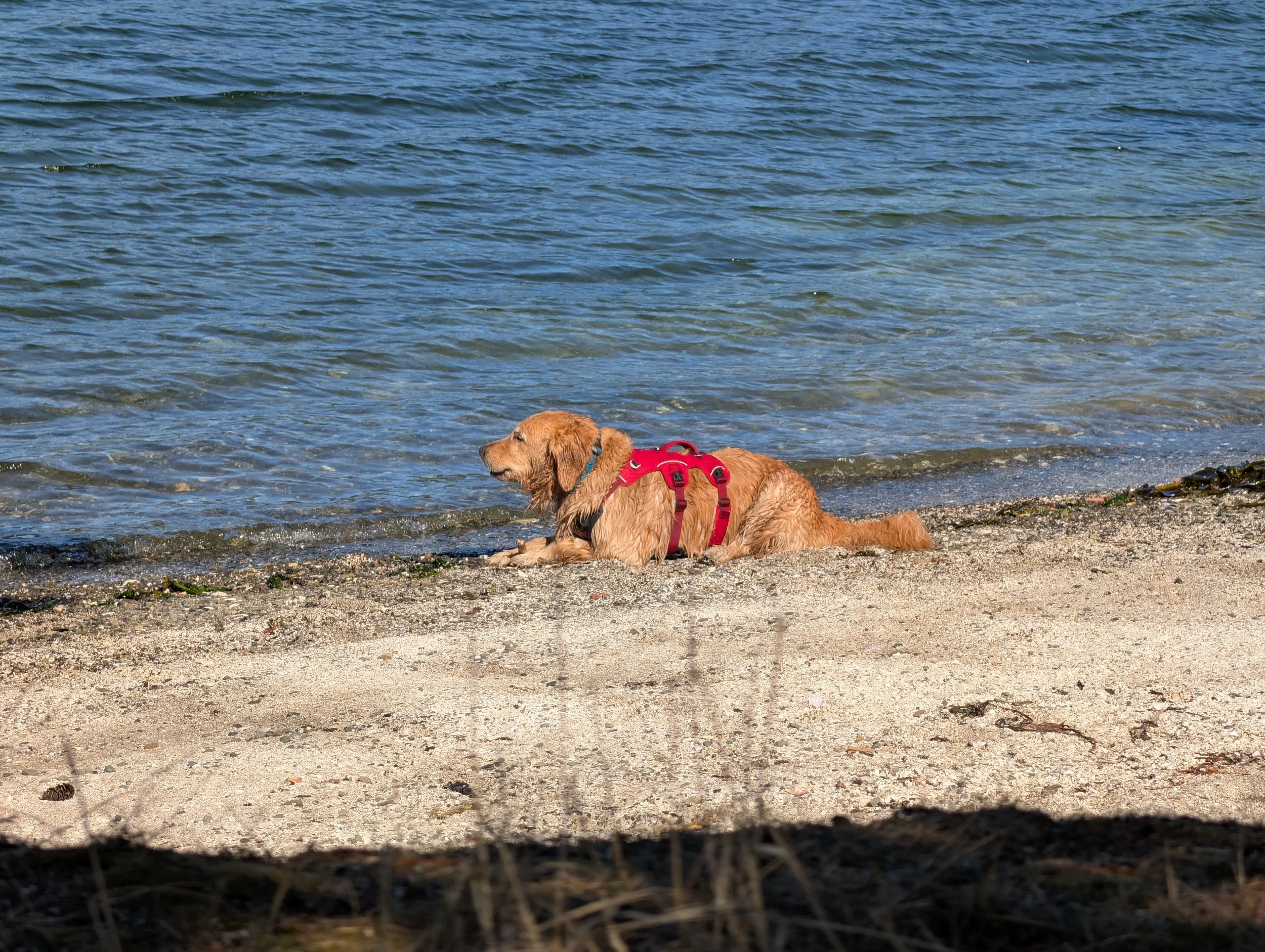
In mid-September, two participants, three staff, seven volunteers, and one service dog named Wylie embarked on an incredible journey to Galiano Island.
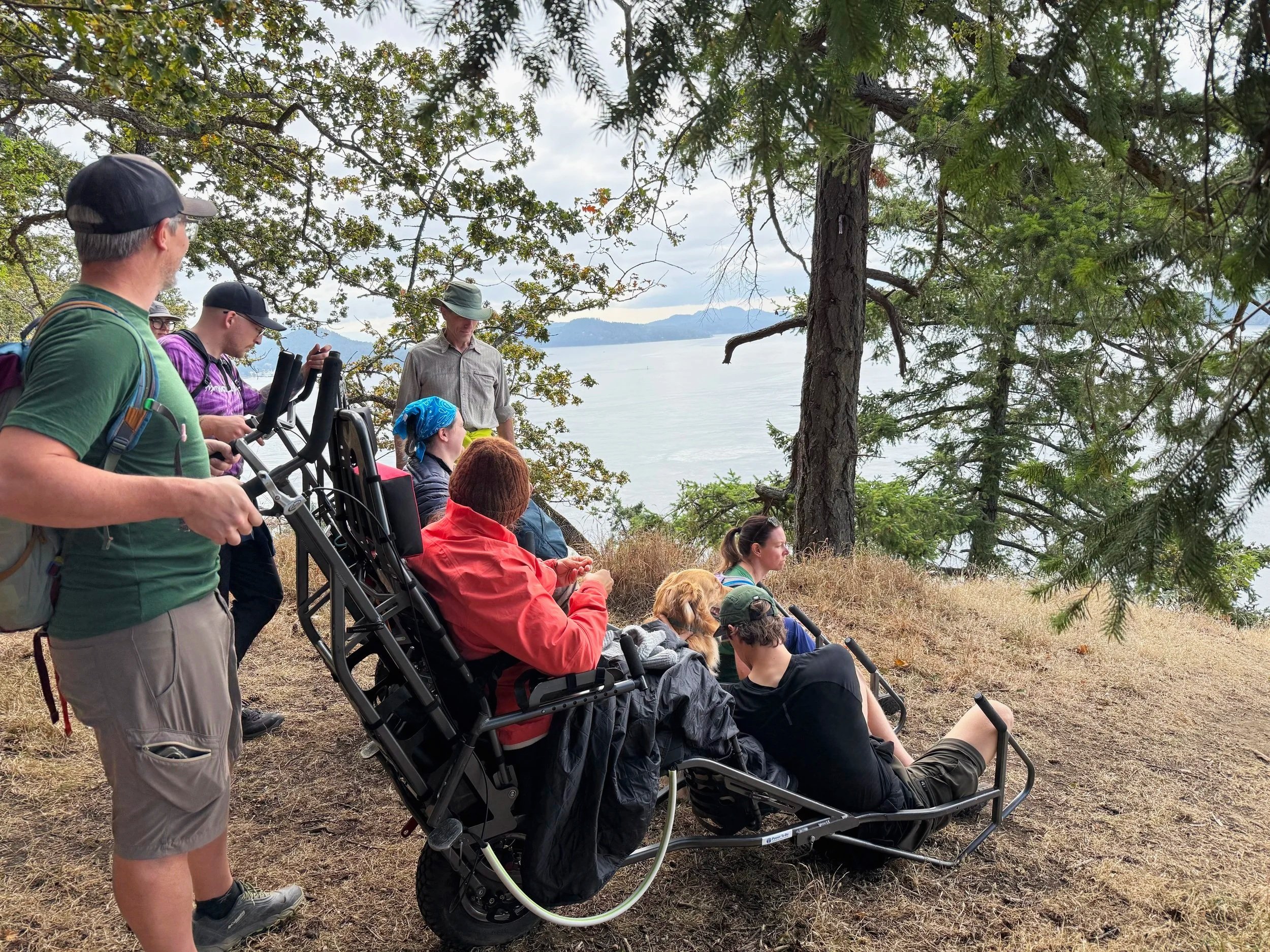
The trip was filled with many “magical moments” through forest trails, around the campfire, in the water, and at the “Top of the World” viewpoint. Together, these moments marked the return of the Trail Rider Overnight Program (or, “TRON”), for the first time in seven years. Disrupted by the pandemic, this program is once again providing meaningful access to nature for people with physical barriers.
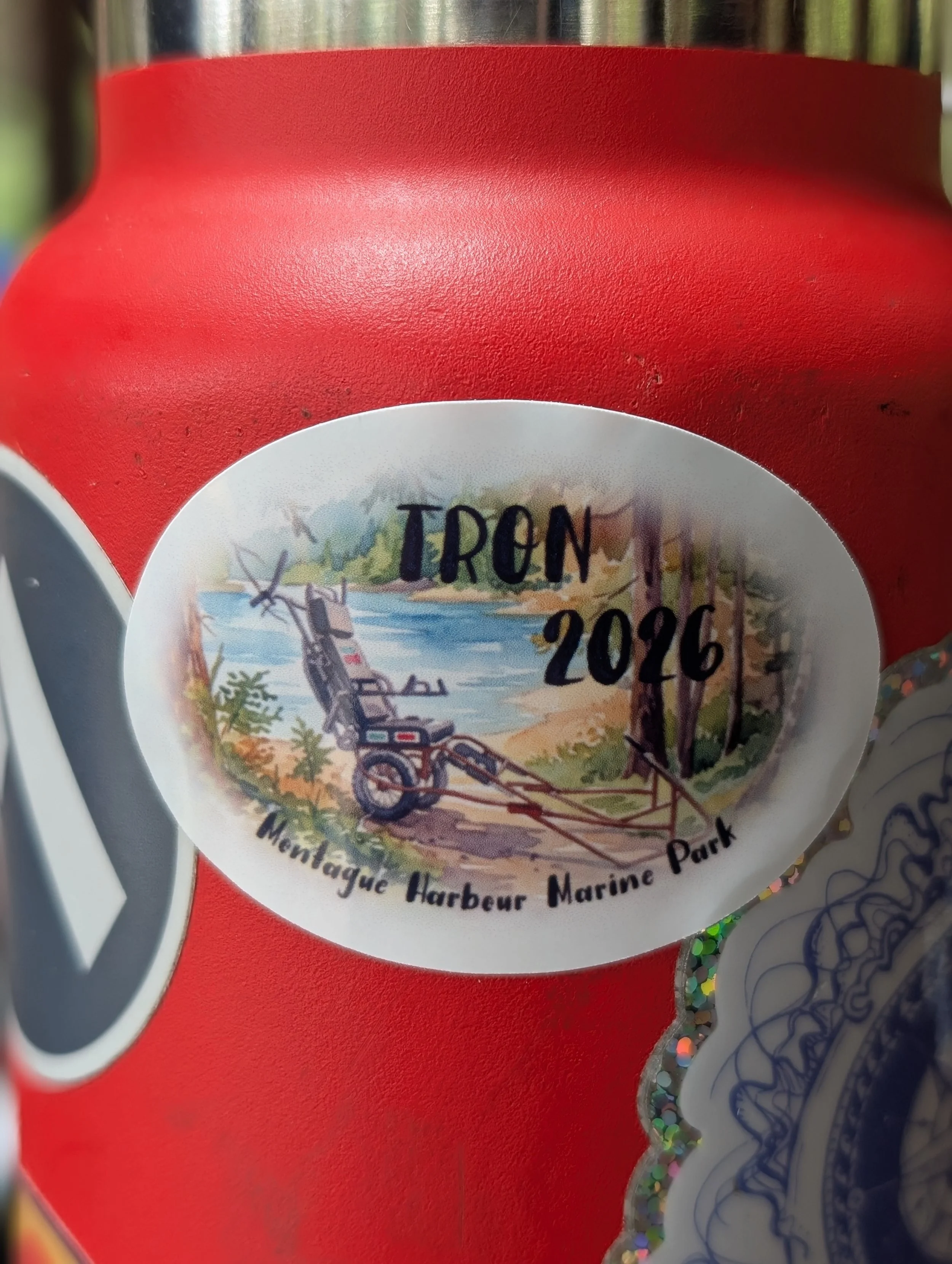
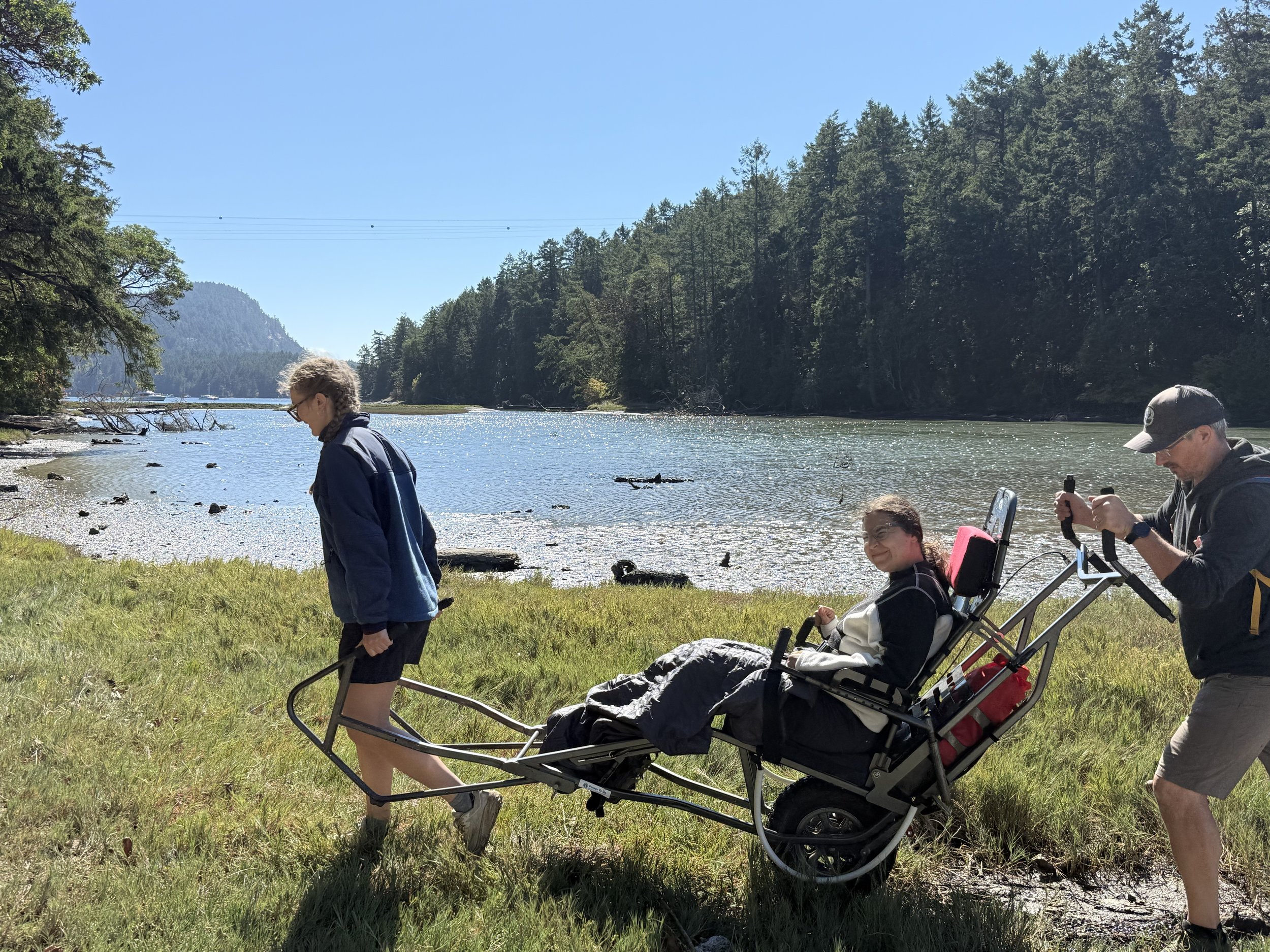
The trip was special. Special enough to prompt one participant to create a unique “TRON 2026” sticker of a TrailRider at Montague Harbour Marine Park, where the group set up home base.
Four Days of Adaptive Adventure
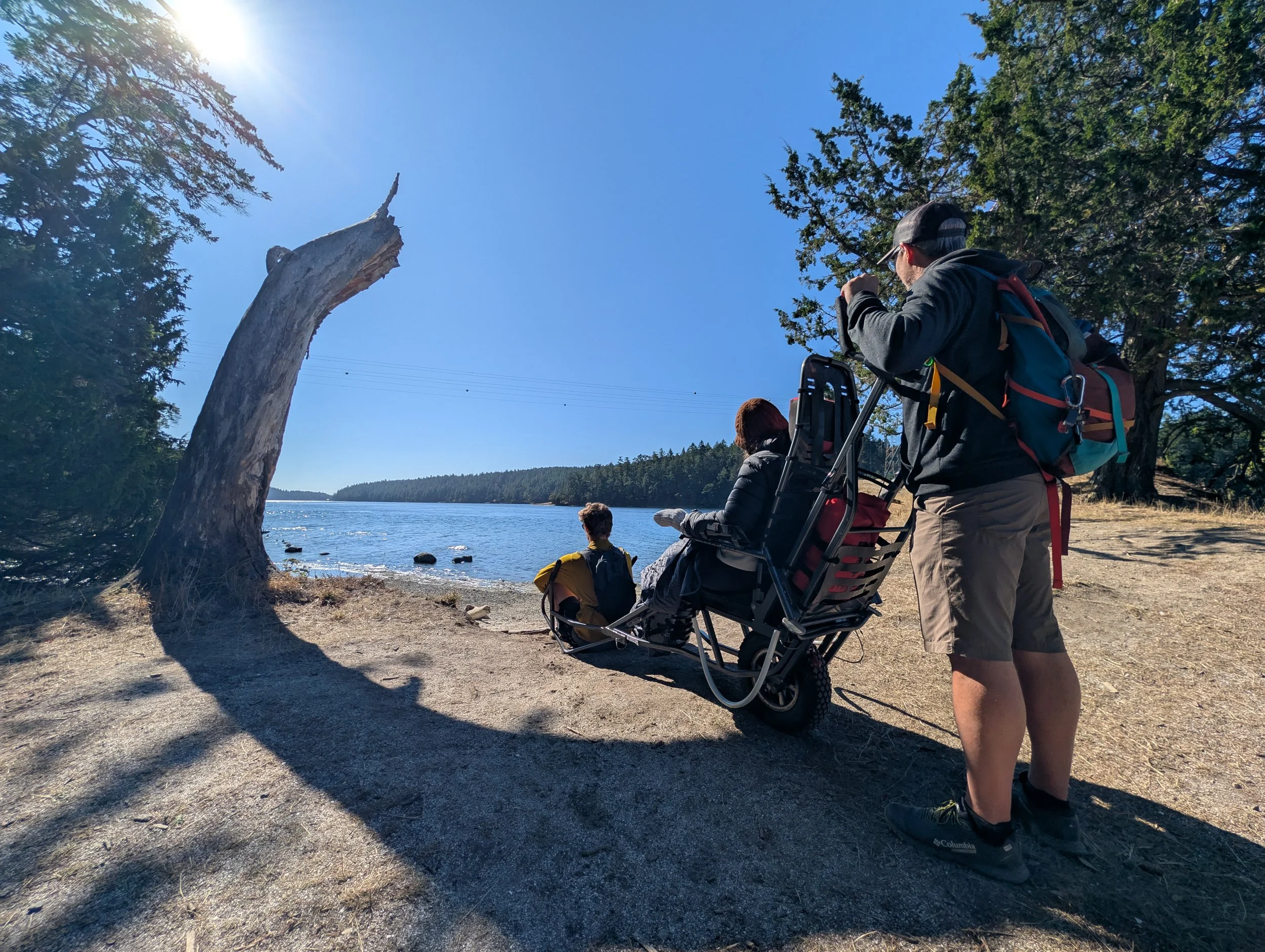
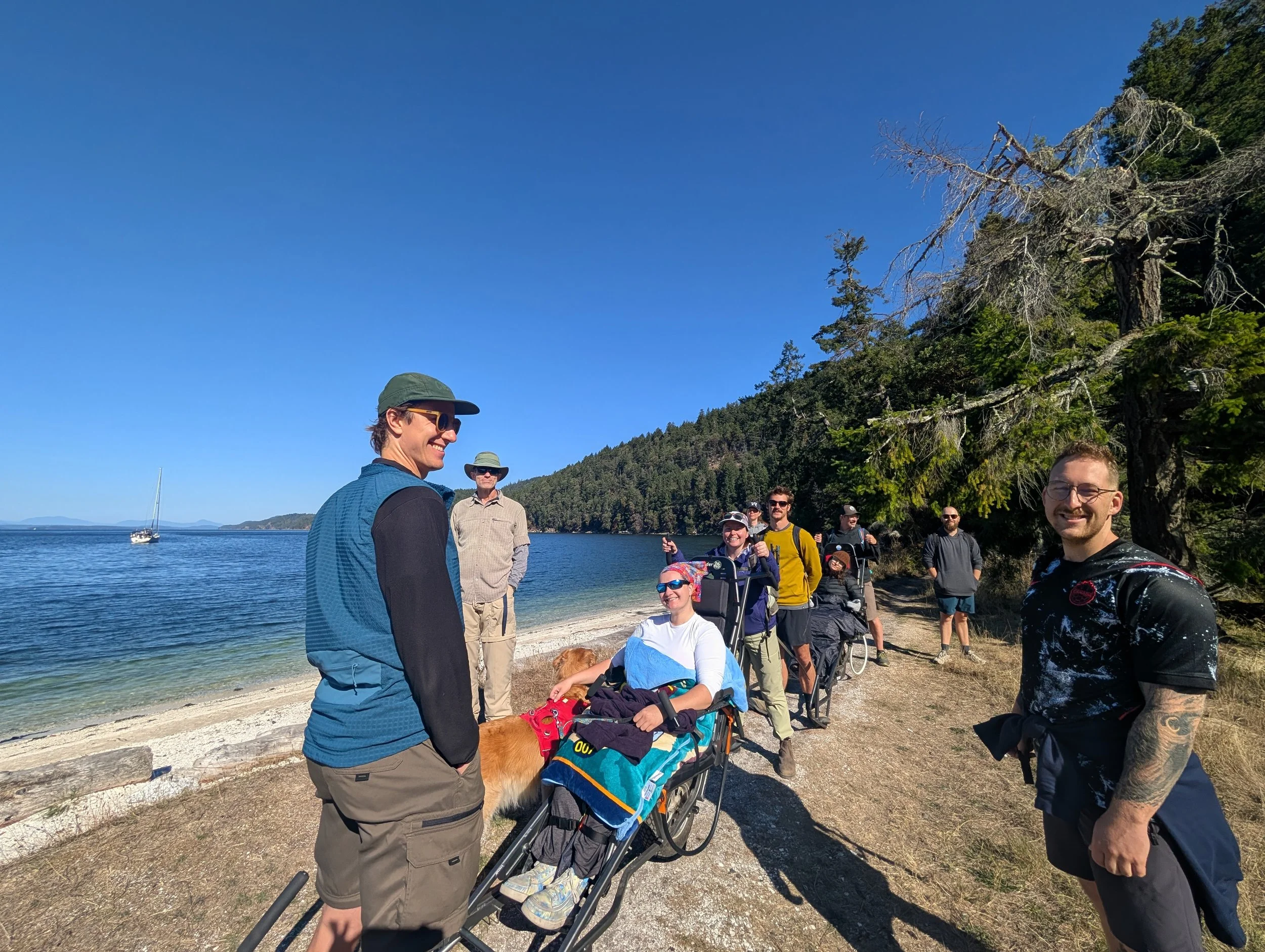
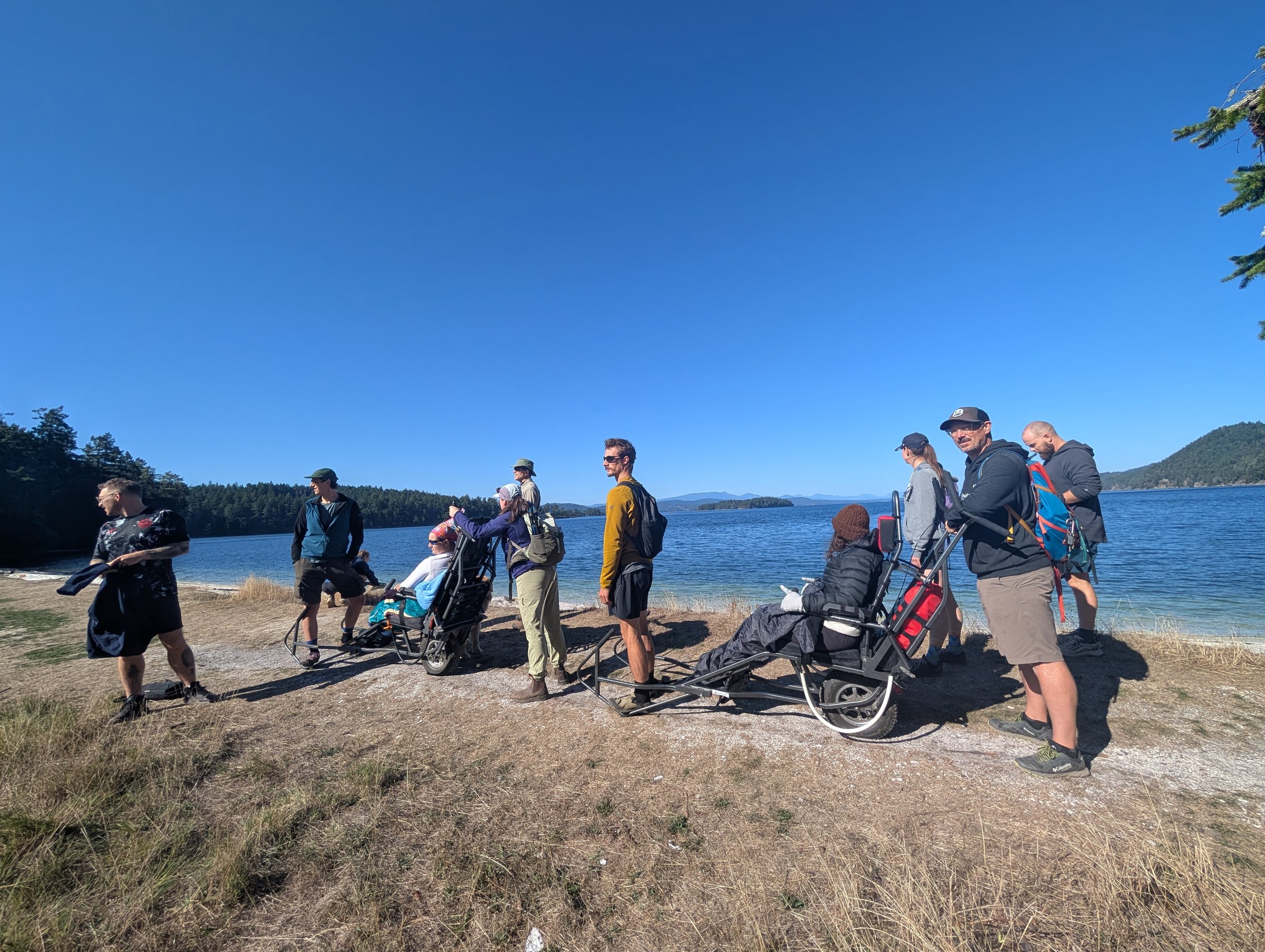
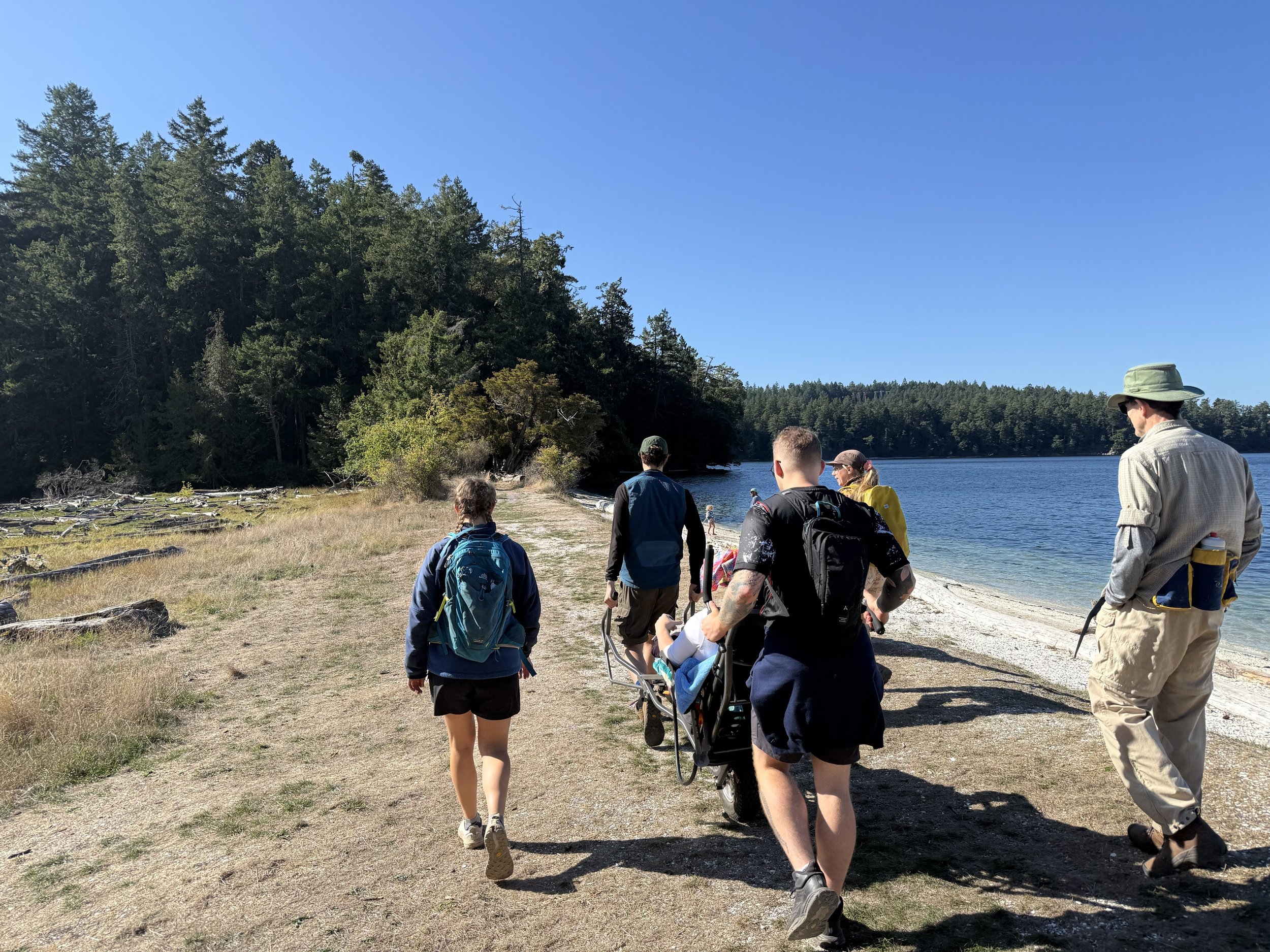
Four incredible days were spent covering long distances on trails, taking in amazing views, and even venturing into the water with the help of adaptive equipment.
The group’s dynamic was quickly established: “From the beginning of this trip,” one volunteer named Devin remarked, “I felt at ease and comfortable with everyone else.”
“Just like at all Power To Be programs,” he said, “I felt like the line between volunteer, participant, and staff functionally dissolves (...) We end up just being a group of people all working together towards the same goal.”
“This is literally a fairytale.”
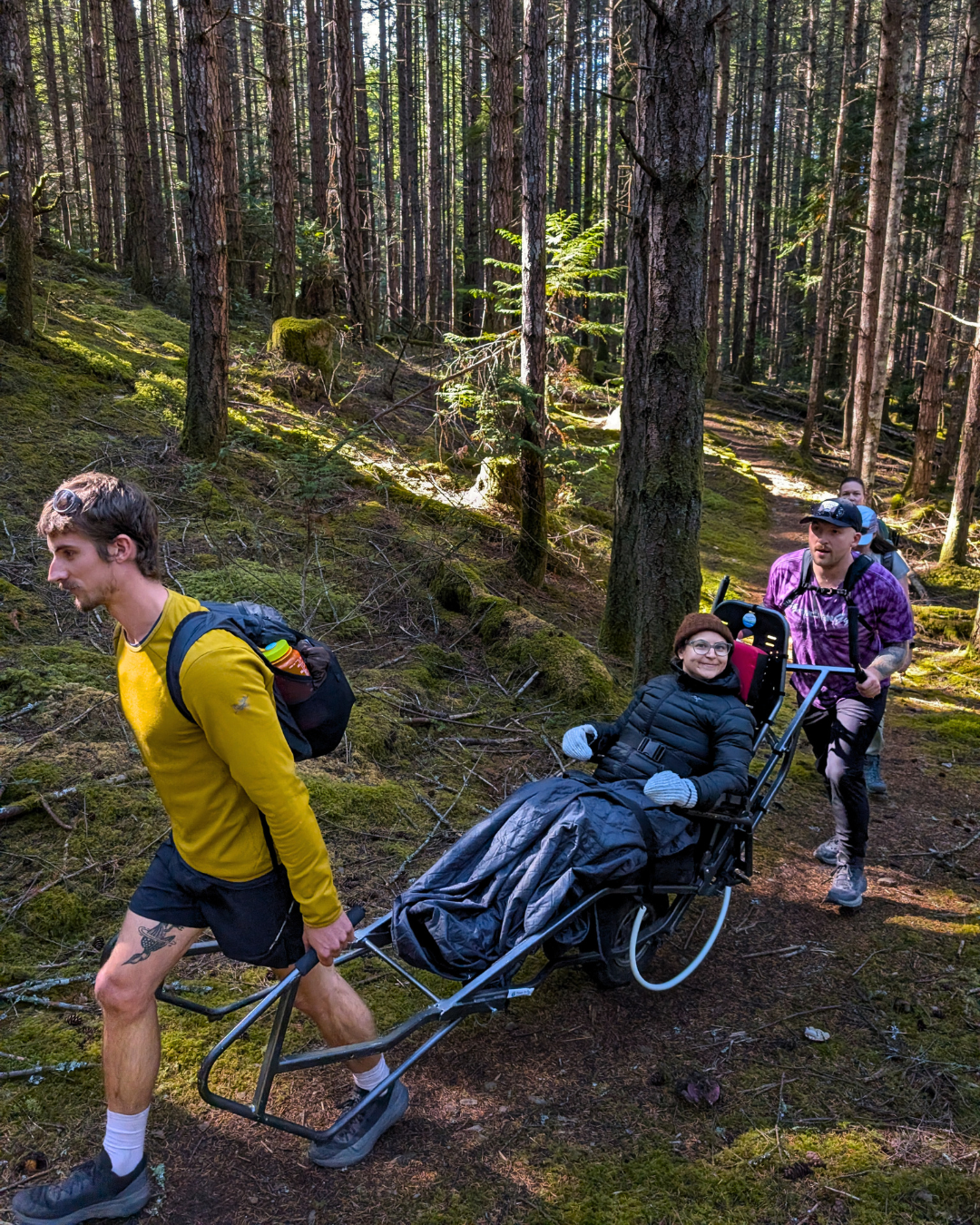
One participant expressed that it was “borderline impossible” to choose a highlight of the trip, because “everything was a highlight.” She then recalled a moment on the second hike of the trip. The group was admiring the sunlight on the forest canopy when someone said, ‘It’s a fairytale wood!” The participant agreed, “this is literally a fairytale.”
On Top of the World
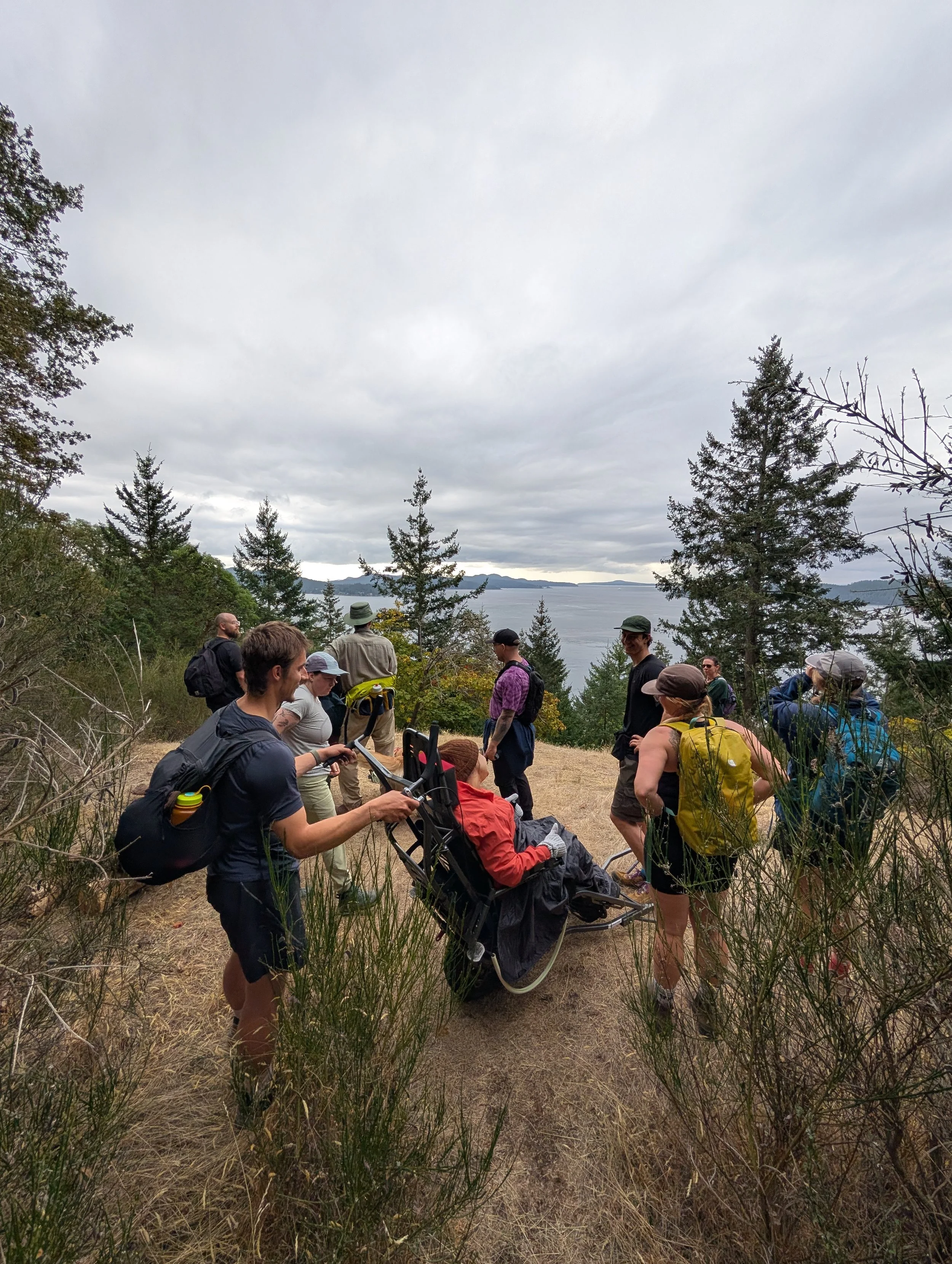
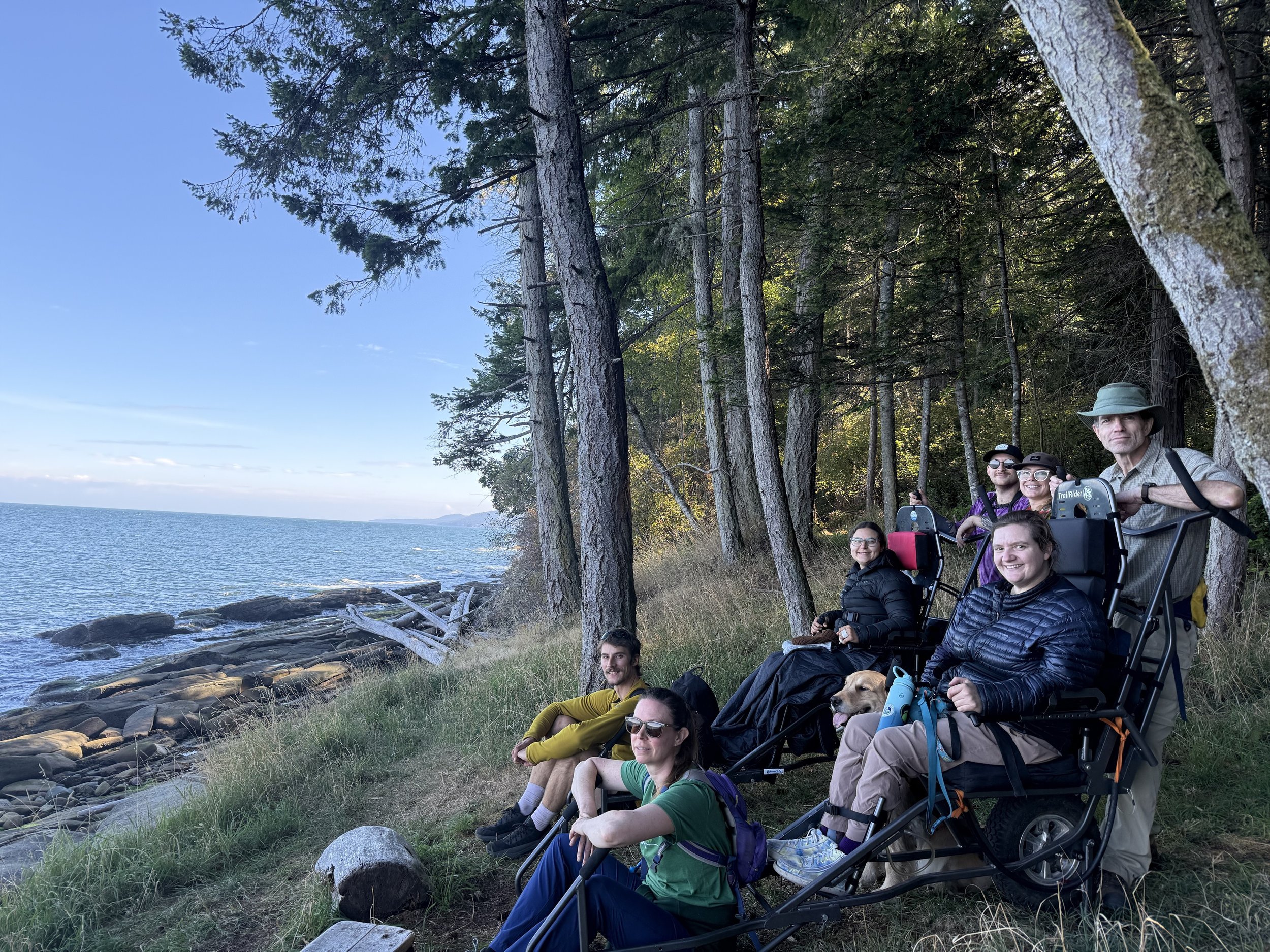
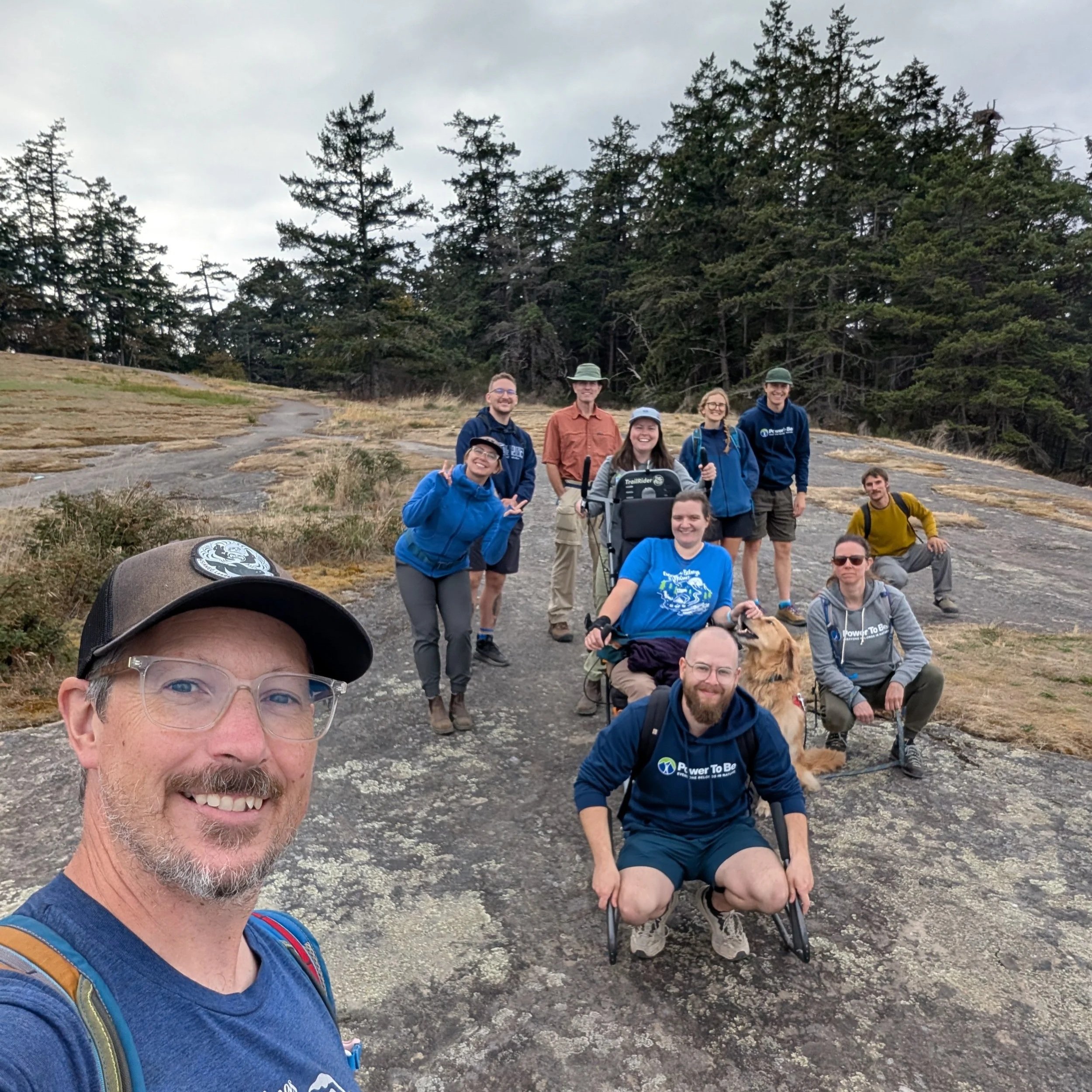
With the help of the TrailRiders, the group navigated a long, steep hike, up to the Top of the World viewpoint on Galiano Island. For a volunteer named Max, it was a “full-circle moment” to see the ferry that brought them to the island, “from our birds’ eye view.” They emphasized how great these views were to “experience as a group, knowing we’d achieved something together.”
“I would have never gotten down here without a team”
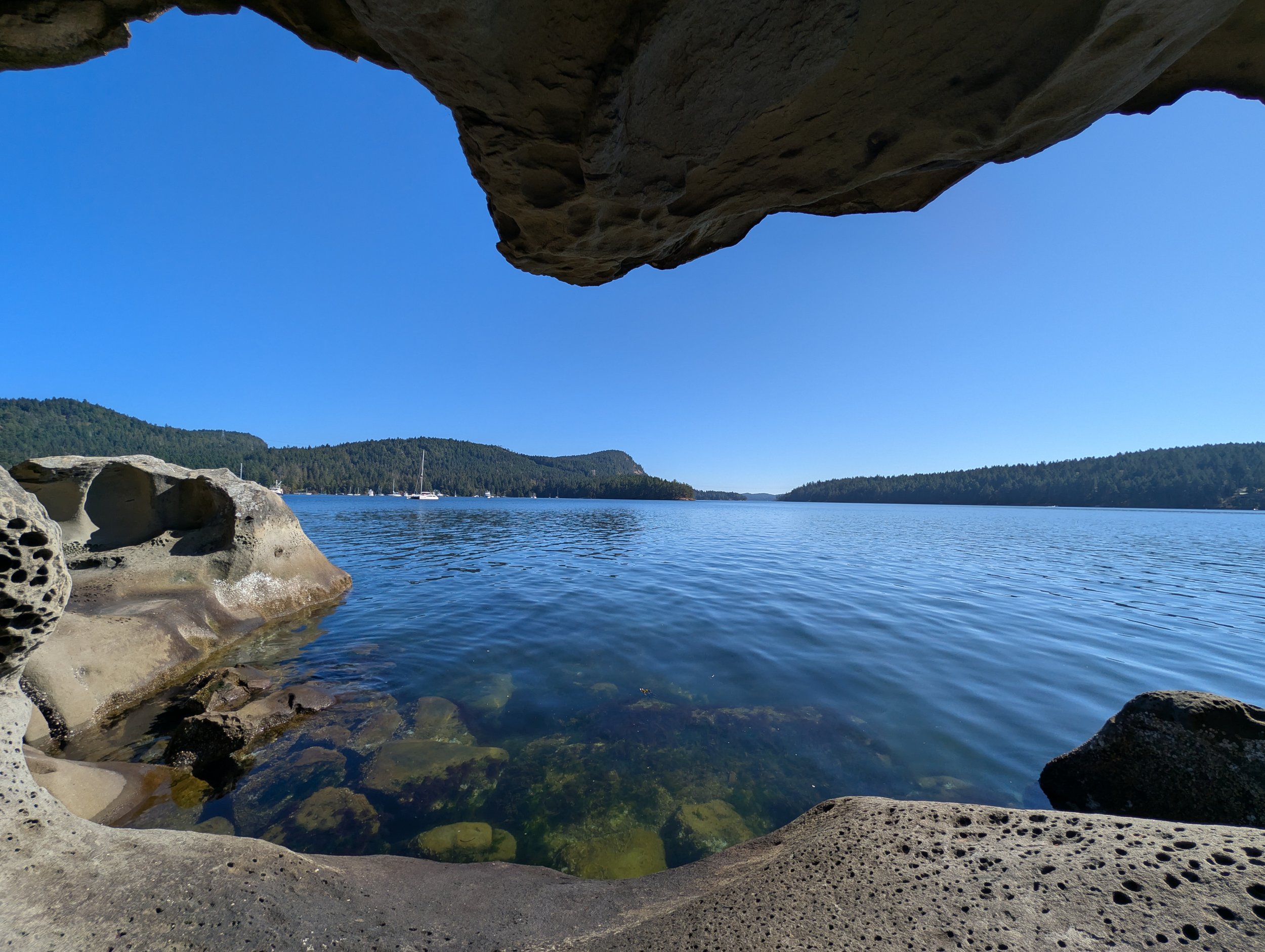
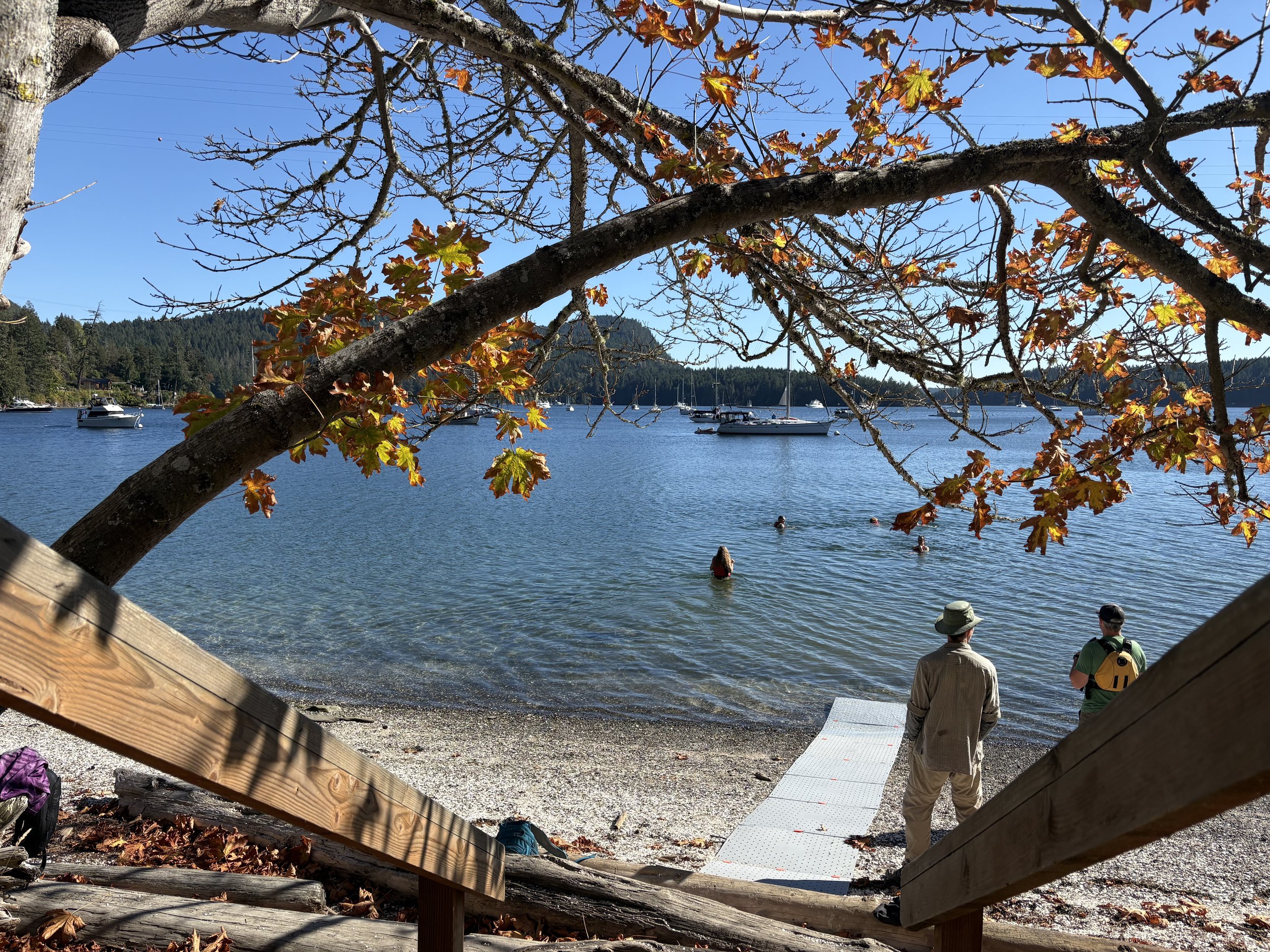
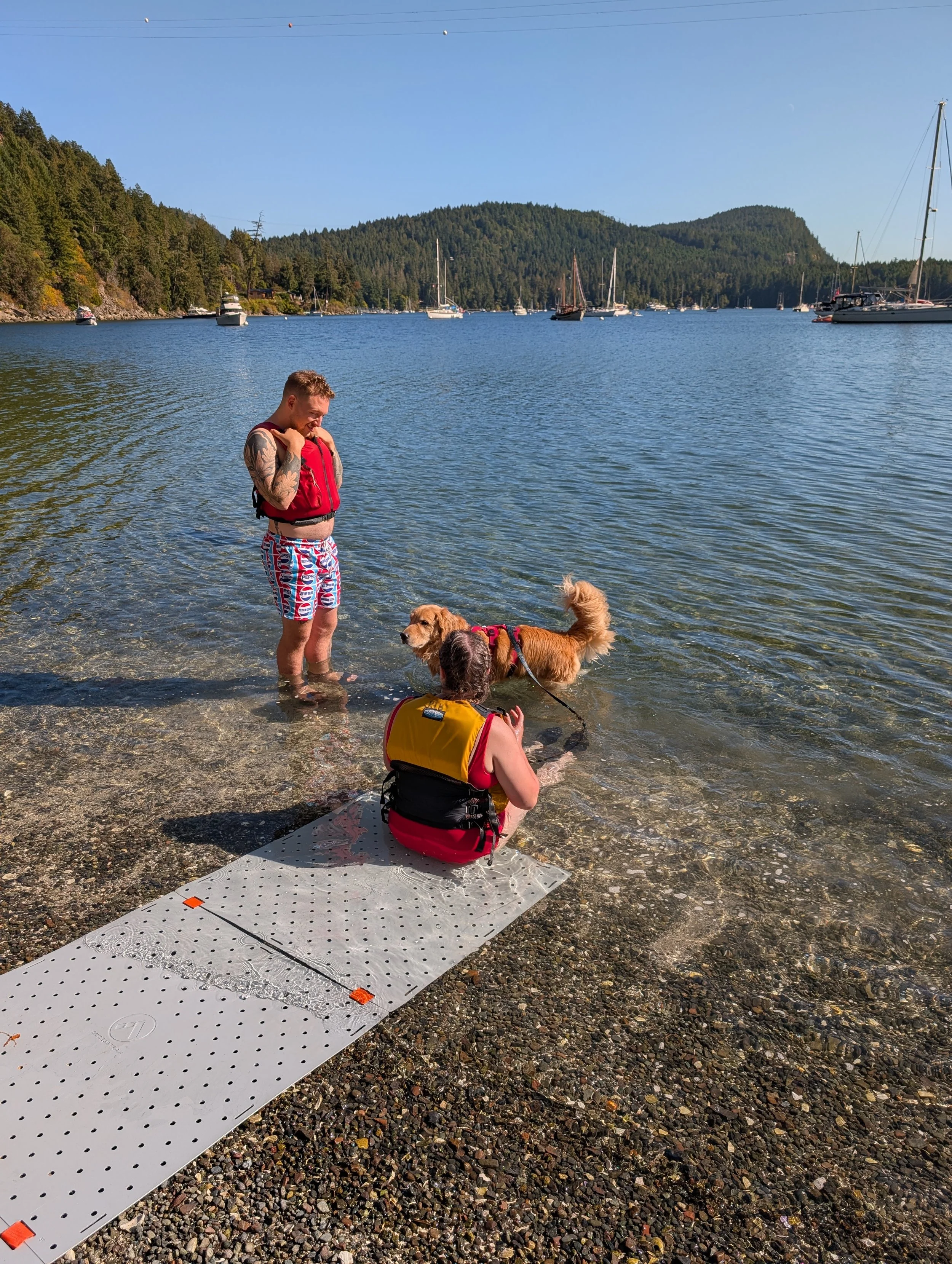
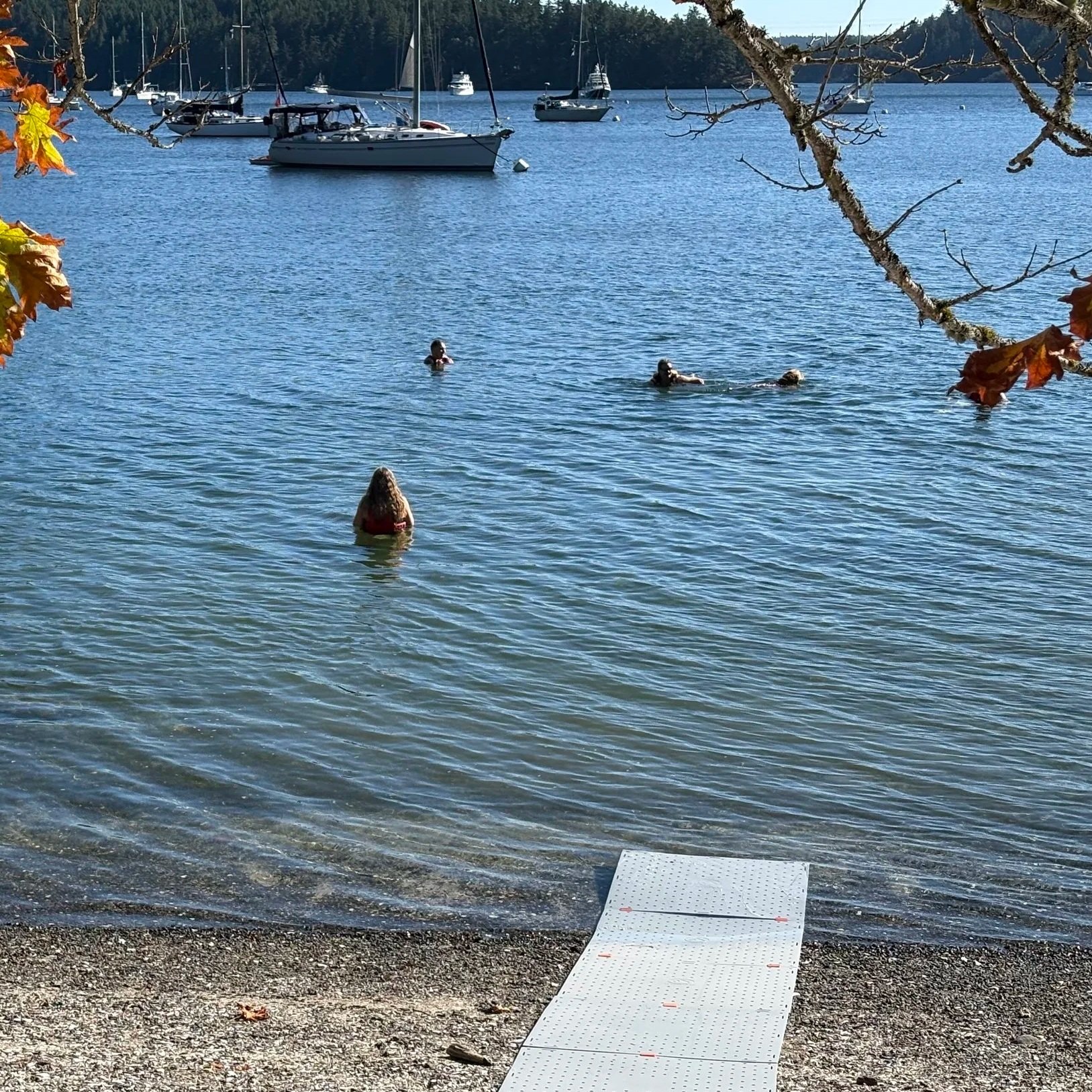
A moment the group will treasure was in the water. Venturing down with TrailRiders and Access Trax mats, participants experienced the cold ocean water of Montague Harbour.
“That was awesome,” commented Max, whose main highlight was seeing one of the participants swimming with the help of her service dog, Wylie.
A volunteer named Jay expressed how magical this moment was, and recalled a conversation he had with that same participant, who said “I would have never gotten down here without a team.”
Three Cozy Nights at the Campsite
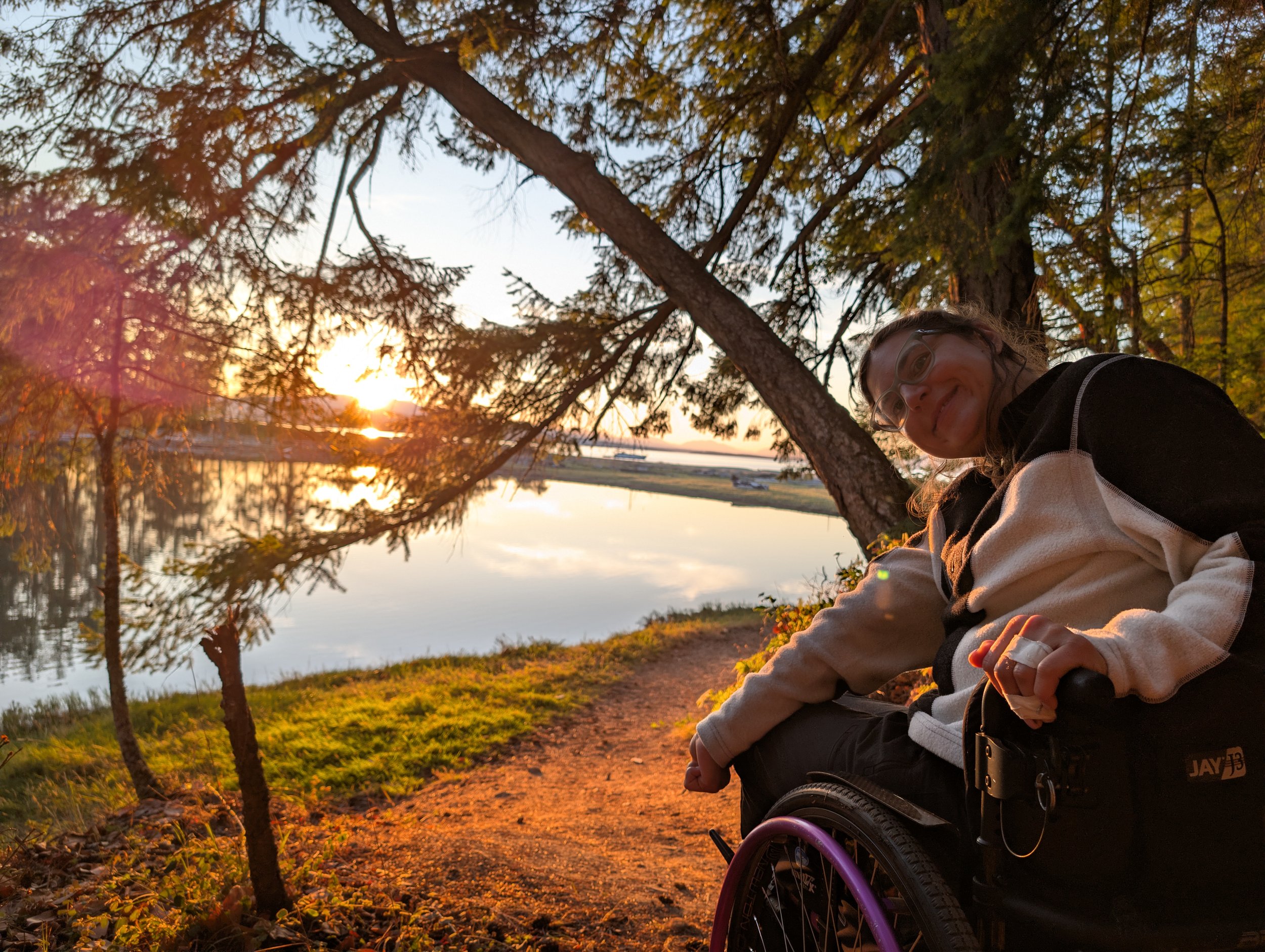
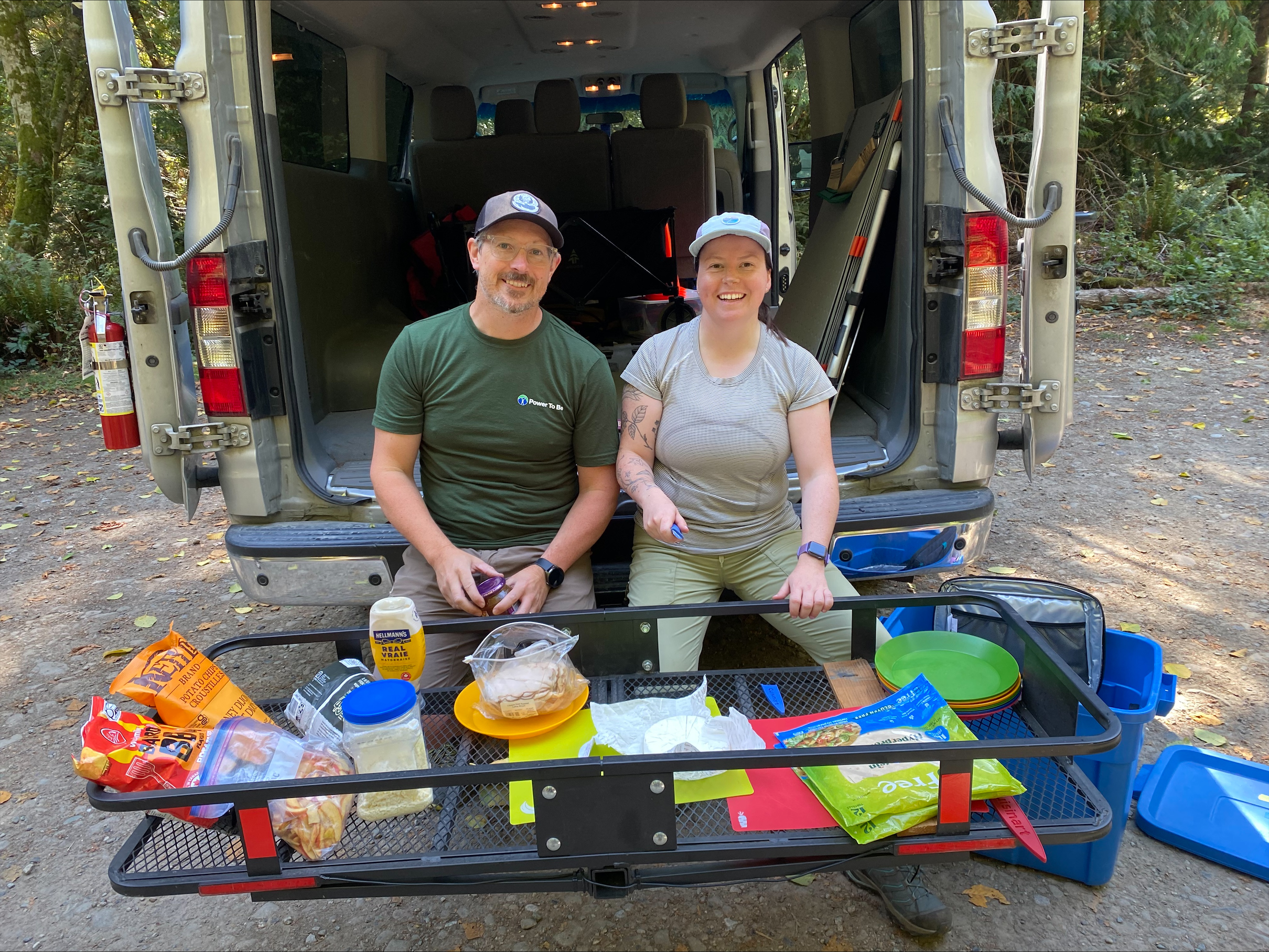
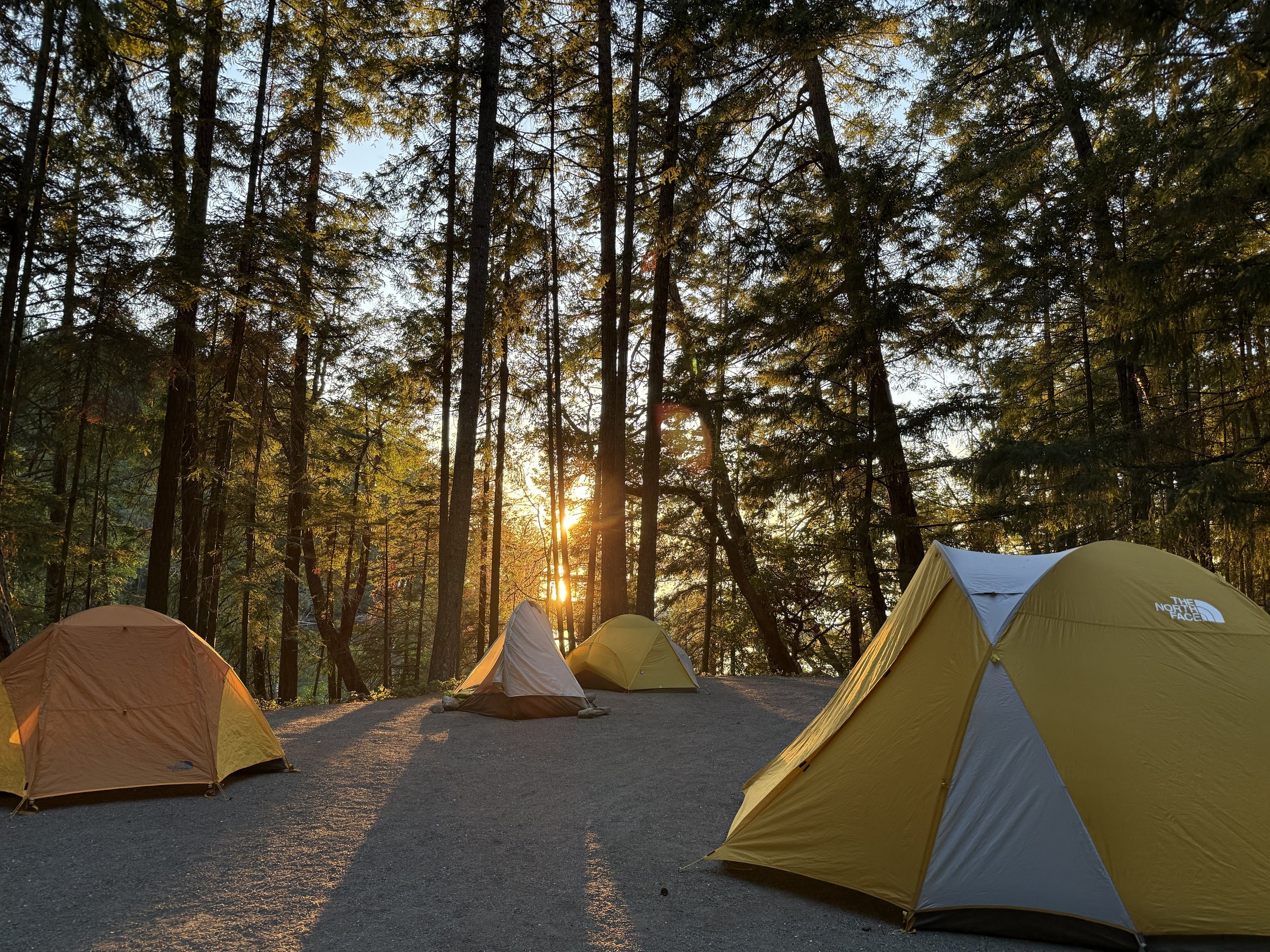
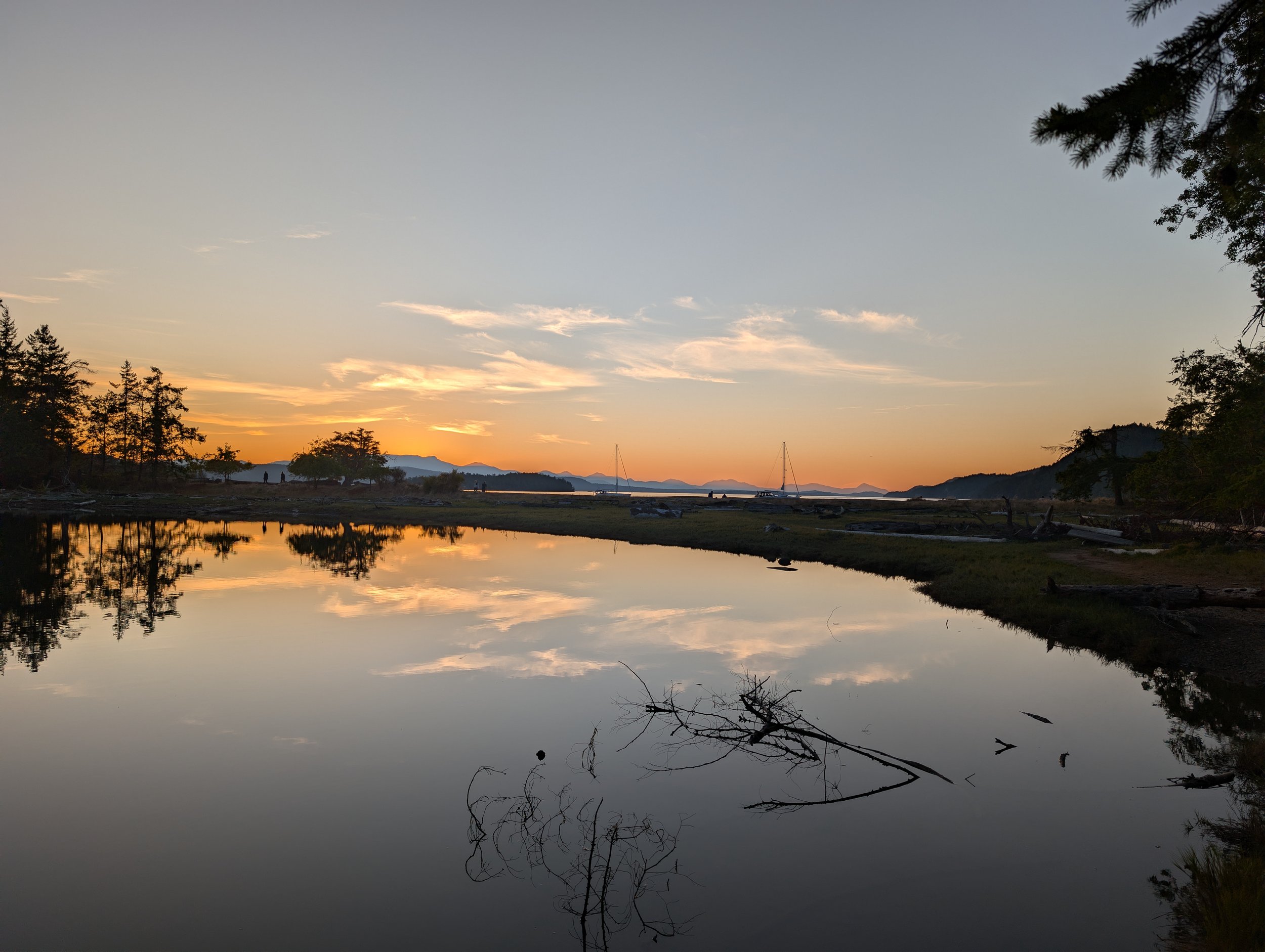
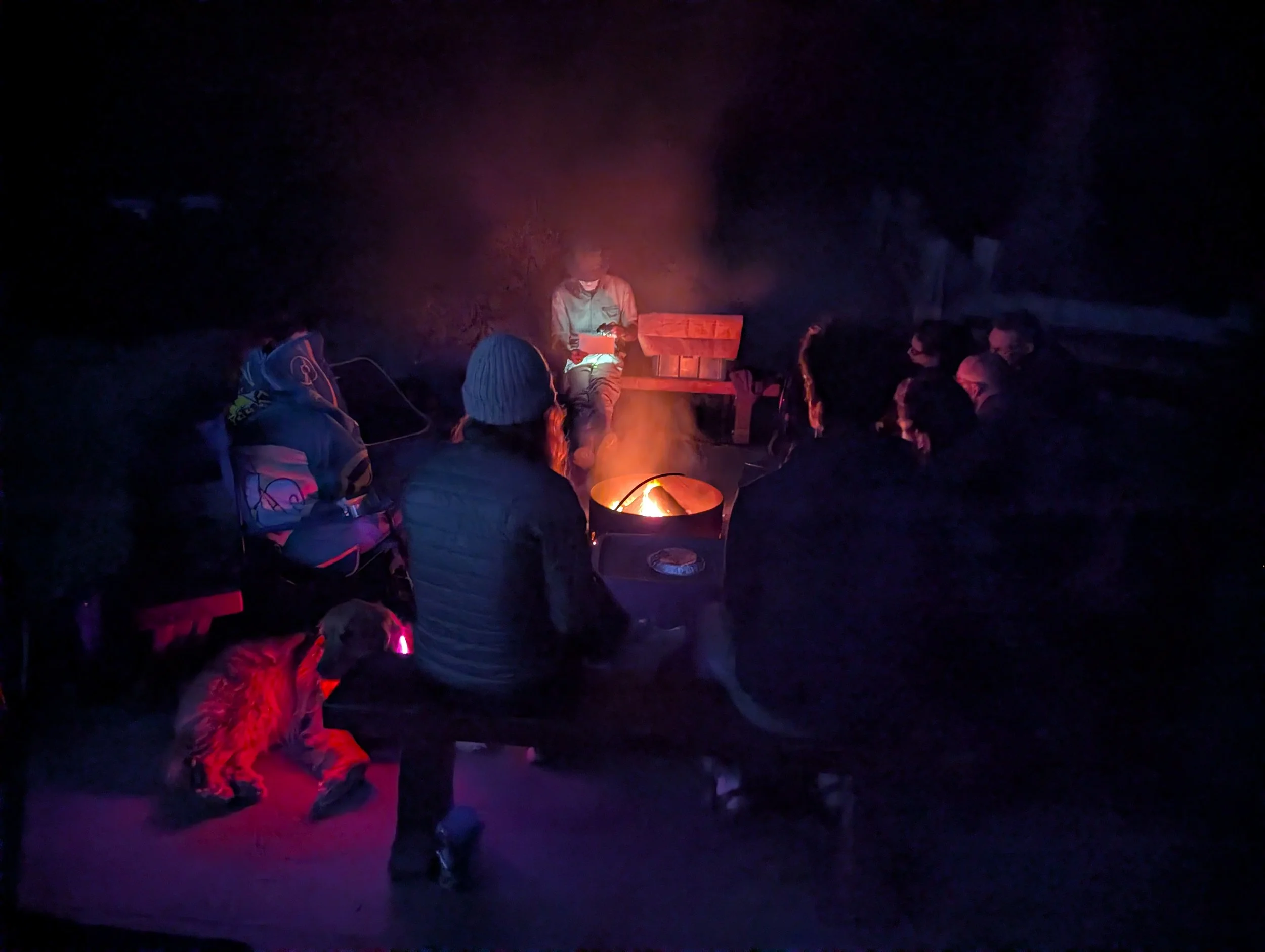
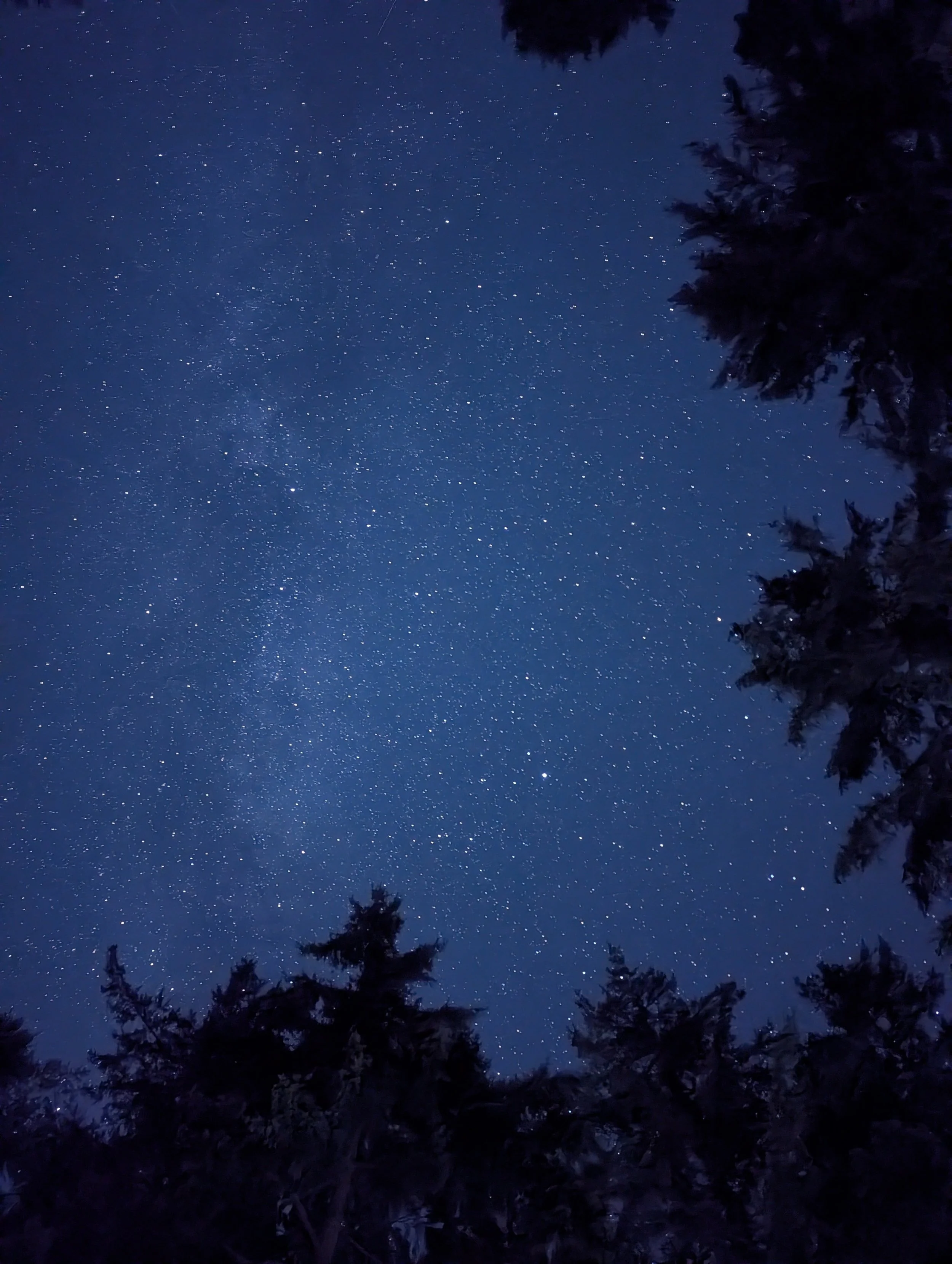
Each night of the trip was spent at BC Parks’ accessible campground at Montague Harbour, watching beautiful sunsets, sharing stories and food around the campfire, playing games, and sleeping in comfy, accessible tents under a starry sky.
A campsite highlight for one participant was being able to use a hammock, which they had owned for almost three years, but had never been able to set up.
“That was really something wonderful,” Erica (Power To Be’s Volunteer Coordinator) said, reflecting on “hammock time,” and being a support for this participant.
Power To Be Jeopardy
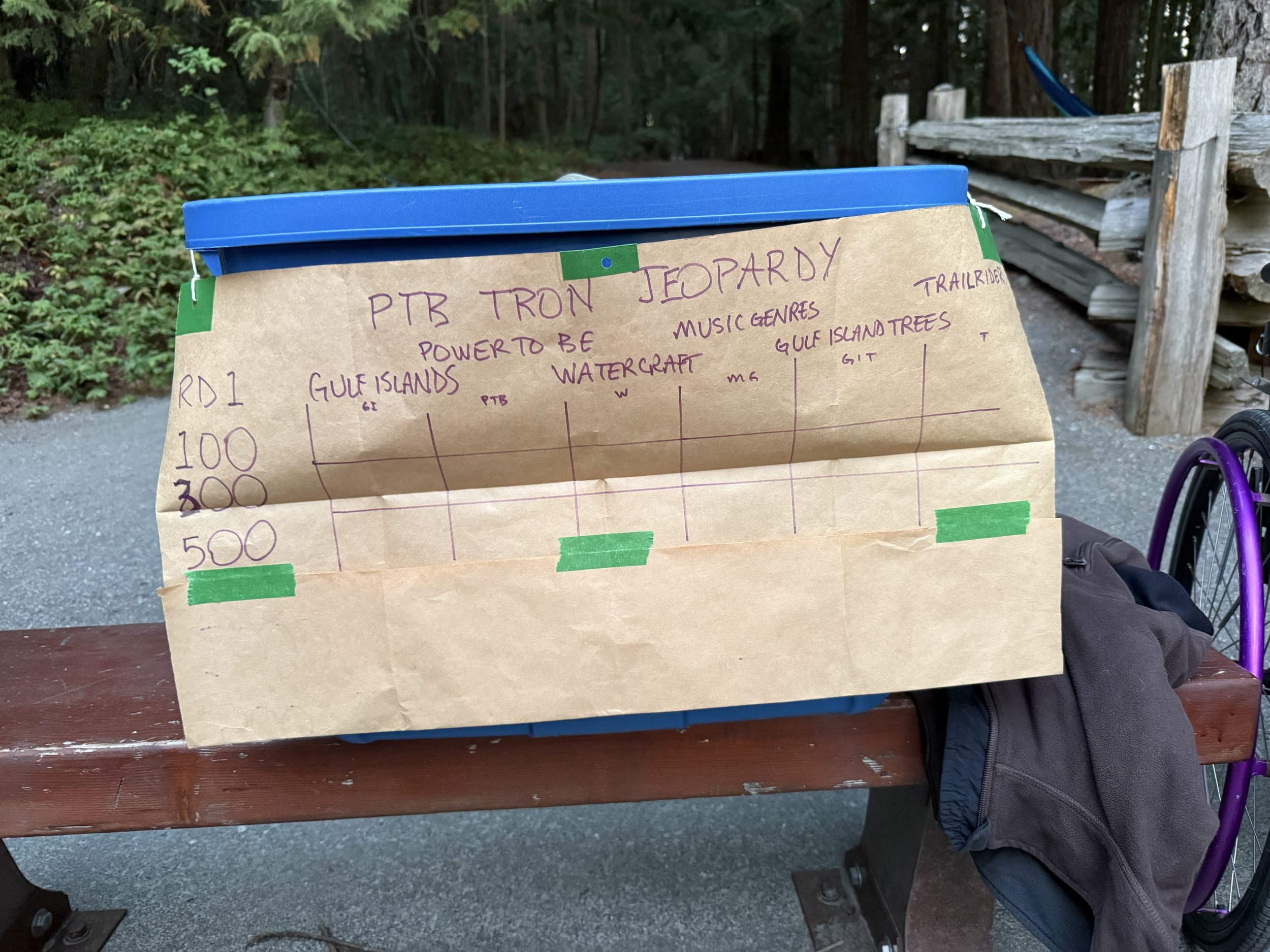
Another campsite highlight for the group was the inaugural game of Power To Be-themed Jeopardy, created for this trip, by Jay. Categories ranged from adaptive equipment to Gulf Island trees, music genres, and Power To Be history and trivia.
“I feel like I learned a lot from yesterday’s Jeopardy,” one participant said, “about what’s possible” when it comes to adaptive equipment.
The Final Campfire
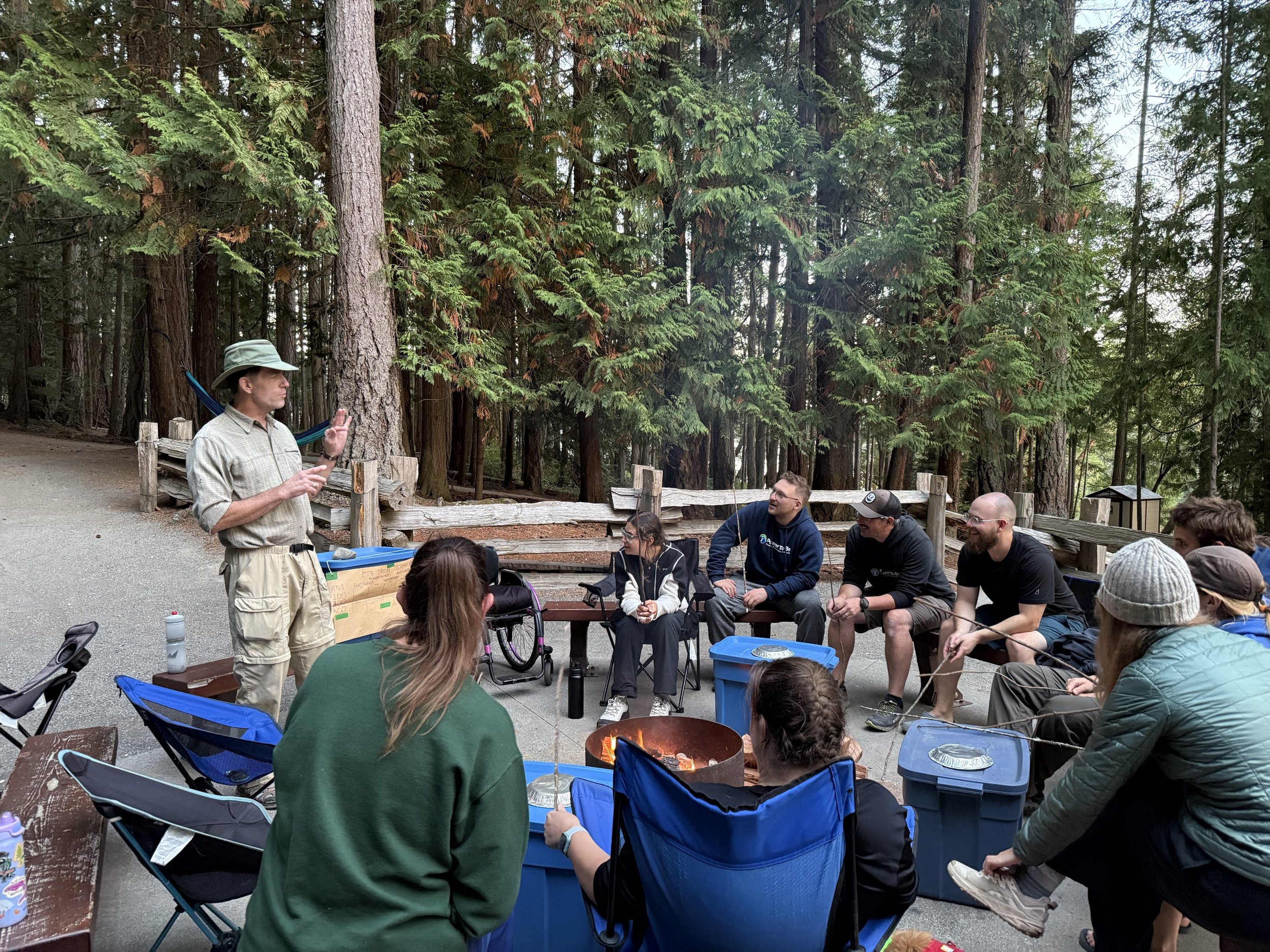
Around the campfire on the final night of the trip, participants, volunteers, and staff each took a moment to share the pieces of their experience that meant the most to them.
Volunteers emphasized how much they had learned from the participants.
One participant spoke about “how much is possible” with adaptive equipment, the removal of financial barriers, and “the right people” making it happen.
For Paul Blood, Power To Be’s Training & Facilitation Lead, it was the conversations, the giggles, the learning—“those little pieces were the sparks set this whole thing alight.”
One participant reflected on the things that have changed with the progression of her condition, and moments she’s told herself, “yep, not happening.” She said she “just had to accept that [and] grieve it,” and that “backcountry camping was one of those things.”
Remembering moments when help was offered before she even had to ask, she said what a wonderful feeling it was “to feel like you’re just held by the people around you constantly.”